IMAGE: S. JAISHANKAR
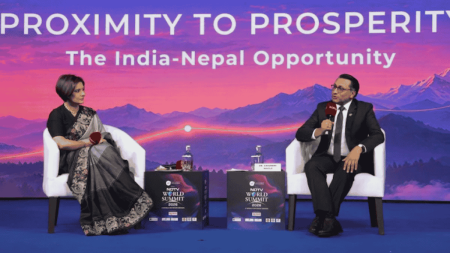
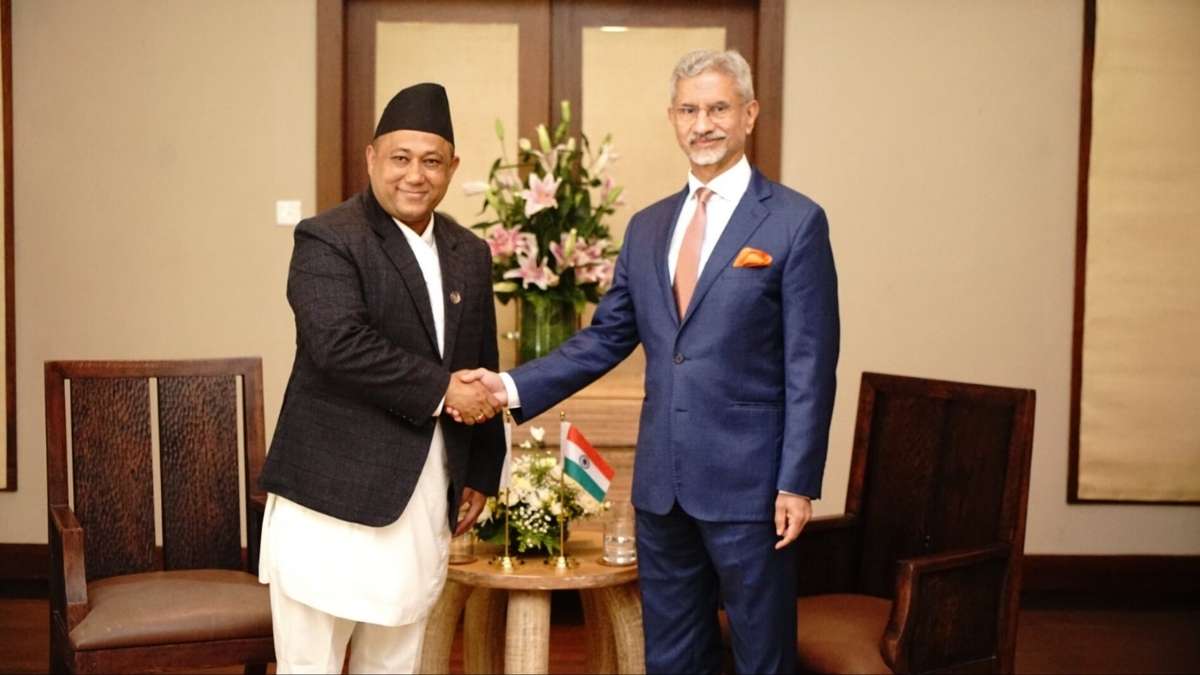
FINANCE MINISTER Swarnim Wagle went to New Delhi peddling reassurance. “There was a time when we associated Nepali nationalism with anti-Indianism. That era is over,” he told the NDTV World Summit last month. The remark was meant to signal a shift in Nepal’s approach to its largest neighbour. It also laid bare a rotten misunderstanding about where the country’s suspicion comes from.
Nepali nationalism has often been expressed through hostility towards India. Politicians have used territorial disputes and accusations of Indian interference to rally support. K.P. Sharma Oli built a political career confronting New Delhi. Pushpa Kamal Dahal has called India expansionist. Balendra Shah, before becoming prime minister, called Nepal’s judiciary and federal government “Indian slaves” after a court overturned his ban on Indian films.
Such episodes are real. So is the history that makes them politically useful. Wagle’s declaration treats the two as though one can be separated from the other by a change of government.
In 2015 Nepal adopted a new constitution after years of political negotiations. India said the document failed to address the concerns of Madhesi communities and denied imposing a blockade. Kathmandu and much of the international press described the disruption of fuel and other essential supplies across the border as an Indian blockade. The United States Congressional Research Service records the episode as an unofficial Indian blockade, which severely damaged bilateral relations. The dispute over terminology does little to change what Nepalis experienced: a landlocked country found itself struggling to obtain essential goods during a national emergency.
The episode matters because it demonstrated how fast ordinary economic dependence can become a matter of national security. It also helps explain why anti-Indian sentiment has survived changes of government and political ideology. A country need not be hostile to its neighbour to remember when that neighbour had considerable leverage over its daily life. That leverage has since become more noticeable.
India accounted for 62.3% of Nepal’s total merchandise trade in fiscal year 2025-26, according to figures published by the Indian embassy in Kathmandu. It received 81.1% of Nepal’s exports in the preceding Nepali fiscal year. Bilateral trade reached $9.38bn in the Indian financial year 2025-26. Nepal’s exports to India were worth about $1.94bn; imports from India were worth $7.45bn.
The figures explain why closer relations are economically necessary. They also explain why Nepal has reason to be cautious. India is simultaneously Nepal’s largest market, its principal source of imports and the main route through which it accesses the sea. A disruption in the relationship can affect fuel, industrial inputs, trade and transport. The imbalance is geographical as much as political.
Wagle’s argument risks confusing recognition of this reality with acceptance of it. Nepal should seek better relations with India because the relationship is so consequential. But the greater the dependence, the greater the value of having options.
Besides diplomatic visits and warm photographs, Nepal needs alternative trade routes and greater export capacity, as well as a broader range of commercial partners. China can contribute to diversification, though the Himalayas, infrastructure costs and the absence of a comparable open border place limits on how far it can substitute for India. Diversification is a way to reduce vulnerability, an invitation to swap one dependency for another.
There is also a difference between anti-Indian politics and legitimate disagreement with Indian policy. The two are often collapsed in Kathmandu. Criticism of a border claim, a trade restriction or interference in domestic affairs does automatically amount to hostility towards Indian people or the Indian state. A country that abandons the ability to criticise its neighbour in the name of diplomatic warmth would be practising a rather peculiar form of sovereignty.
The same standard should apply to New Delhi. If India wants Nepal to move beyond suspicion, it must recognise that its own conduct has helped create it. Cooperation on electricity and trade is valuable. So is respecting Nepal’s decisions on its political system and foreign relationships. The 1950 Treaty of Peace and Friendship remains part of the relationship’s legal and political framework, and questions about its terms have never disappeared from Nepali debate.
None of this means Nepal should revive the theatrical nationalism of Oli’s government. The Greater Nepal map, arguments over the birthplace of Ram and public insults directed at India have often generated more noise than diplomatic leverage. They have also made it easier for politicians to present domestic failures as the consequence of foreign pressure.
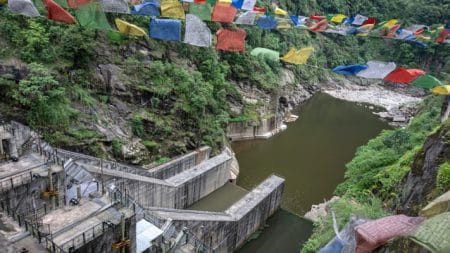
A more mature nationalism would be less interested in proving its hostility and more concerned with building the capacity to resist pressure. That means producing goods India wants to buy, generating electricity it wants to import, maintaining credible institutions and developing the economic strength to negotiate on more equal terms.
Wagle may be right that Nepal should move beyond anti-Indian politics. He is premature in suggesting the underlying tensions belong to another era. Nationalism will lose its anti-Indian edge when Nepalis have fewer reasons to fear their dependence, and when India gives them fewer reasons to remember it. That is a much gruesome task than declaring an era over. ■