IMAGE VIA GOOGLE
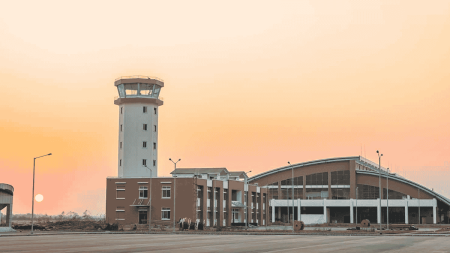
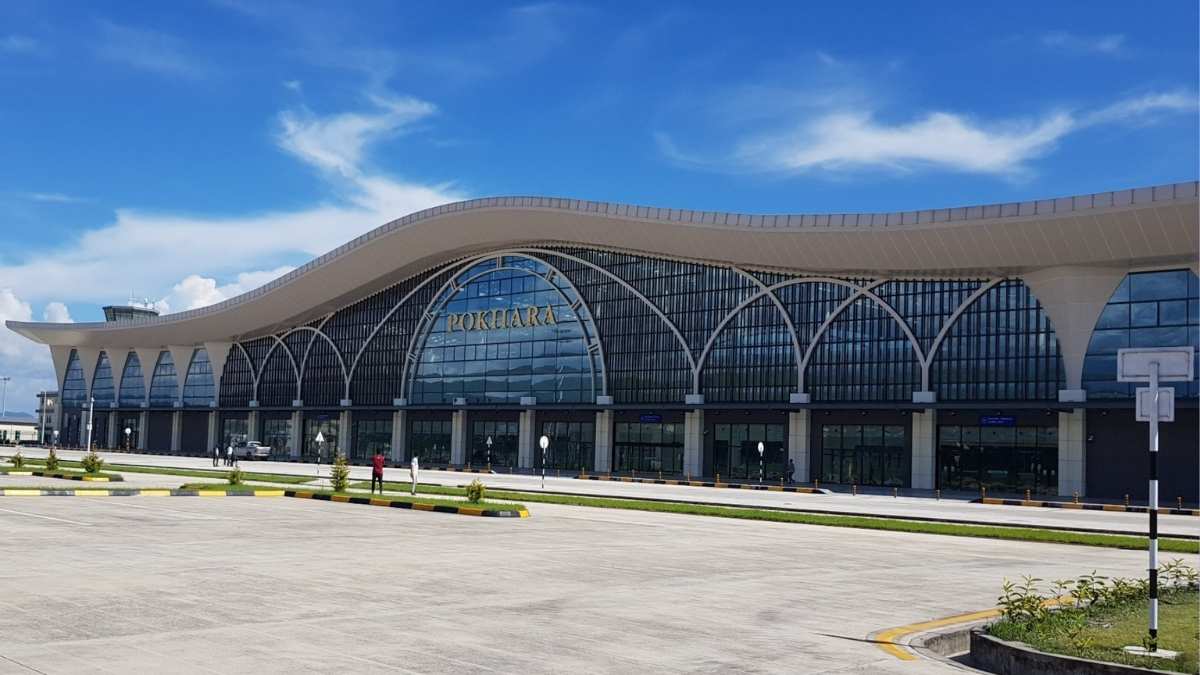
NEPAL’S AIRPORT strategy is upside down: it built supply and prayed for demand. Airlines did not obey. Pokhara International Airport opened in January 2023 and spent years chasing scheduled service. Gautam Buddha International Airport, near Lumbini, got the same cold shoulder. Both were sold as relief for Kathmandu and shortcuts for foreign visitors. The market has voted: Tribhuvan International Airport still handles almost all of Nepal’s international traffic.
The numbers are ugly. In 2025 Tribhuvan handled 5.04 million international passengers — a record. Gautam Buddha handled just 13,432 international passengers from January to November, according to the Civil Aviation Authority of Nepal. Pokhara recorded 798,791 passengers in the same period, but that includes domestic travellers. Its international traffic was negligible. Nepal has three airports classified as international. It has one real international gateway.
The contrast is brutal. Gautam Buddha opened in May 2022 to serve Lumbini, Buddha’s birthplace, and the big migrant-worker population in western Nepal. It has a 3,000-metre runway that can take larger passenger jets. Its international record is still close to empty. By 2026 it had handled a cumulative 1,222 international scheduled and charter flights carrying 69,377 passengers. Its last international service was a Thai AirAsia flight from Bangkok on March 25th: 14 passengers in, 106 out. Since then no scheduled international flights.
Pokhara did slightly better but not much. Himalaya Airlines started weekly Lhasa flights in March 2025 and killed the service in March 2026 because it could not fill seats. Flydubai began daily Dubai flights on September 23rd — the airport’s first regular service by a major foreign carrier. The inaugural Boeing 737 MAX 8 arrived with 113 passengers and left with 152. In its first 20 days, the airline flew 19 flights, carrying 3,113 passengers into Pokhara and 1,423 out. That is inbound-heavy. It looks like visitors arriving, not a two-way flow of business and leisure travellers.
Demand starts in Kathmandu. That is where Nepal’s international business actually happens: ministries, embassies, universities, hospitals, corporate offices and the country’s biggest cluster of migrant recruitment agencies. Tribhuvan also serves travellers going to India, the Gulf, Malaysia, South Korea and beyond. Its traffic is powered by millions of Nepalis flying abroad for work and study — a market Pokhara and Bhairahawa cannot clone.
Tourism is a weaker foundation than airport planners assumed. Pokhara pulls trekkers, mountaineers and domestic holidaymakers. Lumbini pulls Buddhist pilgrims. Neither pulls enough visitors, all year, to sustain several daily international routes. Nepal received 1.16 million foreign tourists in 2025 but most entered through Kathmandu. An airport near a tourist attraction does not create an international market. Airlines need paying passengers in both directions, every season.
Airlines also care about what happens after landing. A Dubai–Pokhara flight makes money because Dubai connects to hundreds of destinations. A Bangkok or Lhasa route depends more on people travelling specifically between those cities and western Nepal. Flydubai can lean on its wider network and its codeshare deal with Emirates. Smaller airlines have fewer ways to fill seats when local demand falls.
Nepal’s aviation reputation makes it worse. The European Union still bans all airlines certified by Nepal’s aviation authorities from European airspace, citing weak safety oversight. The ban hits Nepali carriers, not foreign airlines flying into Nepal, but it stains confidence in the system. It also makes it difficult for Nepal Airlines and Himalaya Airlines to build partnerships and expand international reach.
The government has tried discounts. At Pokhara, landing, parking and navigation charges are waived until September 2028, and ground-handling fees are cut by half. Those incentives cut airline costs. They do not create passengers. Airlines pick routes by expected revenue, aircraft use and profitable onward connections. Free parking is worthless when the plane leaves half-empty.
Then comes the debt. Pokhara International Airport cost around $216 million, financed largely by a loan from China’s Export-Import Bank. Gautam Buddha was another big bill, backed by foreign financing and public funds. Both airports pay for maintenance, staffing, security and operations no matter how few international passengers show up. Their economic case depends on traffic that has not arrived.
The Kathmandu concentration is also a policy blunder. Nepal spent heavily on concrete while paying less attention to the commercial conditions that decide airline routes: dependable ground transport, hotels, immigration services, cargo facilities and access to major markets. Bhairahawa especially needs a working ecosystem for migrant workers and tourists. Airlines cannot build one alone.
Flydubai’s Pokhara service shows a possible path. Its first weeks proved a foreign carrier can find enough demand to establish a route, especially when it links a regional destination to a global hub. But one daily flight is a lousy payoff for an airport built for far more. Nepal’s next aviation investment will be judgedby how many airlines can afford to use it. ■