Image: Getty Images
On the morning of September 22nd, moments before Argentine markets opened, the United States Treasury did something extraordinary. In a terse, carefully worded post on X, Secretary Scott Bessent declared Argentina a “systemically important ally” and pledged that “all options” were on the table to support its currency. These options included bilateral swap lines, Treasury-backed dollar sales and, most notably, the possible deployment of America’s Exchange Stabilisation Fund (a Depression-era facility usually reserved for serious financial distress).
The message worked. Argentine sovereign bonds, which had fallen to distressed levels, rallied sharply. The peso clawed back lost ground. Investors exhaled. For now, Argentina’s slow-motion crisis has been paused. But beneath the calm, nothing fundamental has changed. The country is deep in debt and short on reserves. It is also politically divided. Dollar support buys time but not trust.
President Javier Milei entered office promising radical change. With a chainsaw as his campaign prop and libertarian slogans as policy goals, he vowed to balance the budget, slash subsidies, privatise state firms and dollarise the economy. At first markets rewarded the effort. Inflation began to ease from the 211% annual rate recorded at the end of 2023. Capital outflows slowed. In July the IMF waived missed reserve targets and endorsed his fiscal path.
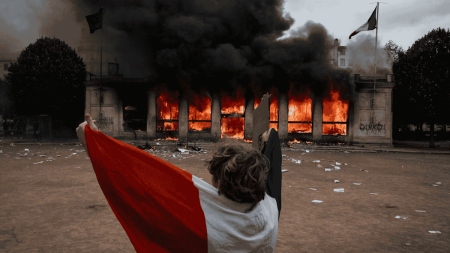
But politics have not followed the script. Milei governs with a weak minority and has had to rely on executive decrees. Key reforms have been delayed, or diluted, or reversed. Attempts to liberalise labour markets stalled. Congress overturned several of his vetoes. And in early September his coalition lost the Buenos Aires provincial elections by a wide margin. That blow dented not only his domestic standing but also the credibility of his economic programme abroad.
Markets translated political weakness into financial risk. On September 17th the peso pierced the upper limit of its IMF-prescribed trading band, trading at 1,475 per dollar. The central bank responded with its largest single-day dollar sale in six years, burning through more than $1bn of gross reserves in 72 hours. But the underlying net reserves—the usable portion, once debts and swaps are stripped out—remained deeply negative. A full-blown currency spiral loomed.
The US Treasury’s intervention was unusually strong, but intentionally vague. No disbursements have been announced and no swap lines activated. Still, the signal mattered. Argentina owes the IMF $41.8bn, more than 40% of the Fund’s global loan book. A disorderly default or currency collapse would rattle both markets and the credibility of Washington’s stewardship of the international financial system.
The statement also signalled that Milei still has friends in the right places. The US has long viewed Argentina as strategically significant, especially in the face of growing Chinese influence in Latin America. In 2023 Argentina joined the BRICS bloc, but since Milei’s election, that orientation has reversed. His administration is openly pro-Western and ideologically aligned with the US Republican mainstream. For Washington, a Milei collapse would not only be a financial failure: it would be a geopolitical one.
Following the Treasury’s statement, Argentine assets staged a sharp recovery. Bonds due in 2029 rose from 63 to 71 cents on the dollar. The Merval stock index jumped 6%. The peso rallied. A further boost came when the government suspended export taxes on soybeans, corn and wheat—the country’s largest sources of hard currency. The move could unlock as much as $7bn in new inflows over the coming months.
But the underlying fragilities stay. Annual inflation is still above 30%. Real wages have not recovered from the 2023 collapse. Public services are fraying under subsidy cuts. And dollar inflows are still below the levels needed to replenish reserves meaningfully.
Moreover, the government’s commitment to a tightly managed exchange rate is proving costly. By defending the peso within a narrow band, it seeks to anchor inflation expectations and contain import prices. But doing so bleeds reserves and discourages exporters from converting earnings through official channels. Economists refer to this as Argentina’s chronic “fear of floating”: an unwillingness to let the exchange rate adjust freely, which results in policy half-measures that satisfy neither markets nor the public.
Argentina’s crisis is often framed ideologically—populists v libertarians, Peronists v reformers. But its underlying problem is institutional. Since 1950 Argentina has signed 22 IMF programmes and defaulted nine times. What unites these episodes is not policy failure alone but also a lack of credibility: governments over-promise and economic plans collapse at the first sign of political cost.
In that sense, the October 26th midterm elections will be more crucial than any IMF review or Treasury tweet. If Milei’s coalition expands its presence in Congress, it may gain the legislative leverage needed to pass reforms. If not, the next crisis may simply be delayed, instead of being averted.
Investors are not romantic. They are willing to buy time if the trajectory is improving. But they will not bankroll a government that cannot govern. Bond spreads, though down from the panic, still imply serious risk. Credit default swaps continue to price in a 71% chance of default over five years.
Argentina’s rescue echoes past interventions—but history cuts both ways. Mexico’s 1995 bailout set the stage for a quarter-century of macroeconomic stability. Greece’s post-2008 rescue left the country with a decade of austerity and economic stagnation. Argentina’s outcome will depend less on the dollars received and more on on the discipline enforced—and on whether that discipline is politically sustainable.
Milei may be the most radical economic reformer Argentina has seen in decades. But radicalism without political support rarely survives. For now Washington’s reassurance has calmed the waters. But should Argentina fail to rebuild its governing consensus, the next panic is not a question of if, but when. ■