
AT THE NEPAL Rastra Bank, the nation’s central bank, the data show things are in very good shape. Foreign-exchange reserves stand at a comfortable Rs2.97trn ($21bn), enough to cover 16 months of imports. Commercial banks are flush with deposits, so much so that they have parked over Rs325bn with the central bank. By the crude metrics of macroeconomic stability, Nepal is sitting pretty.
Yet step outside the vaults and the picture reverses. Economic growth is sluggish. Private investment is weak. A wave of youth protests recently shook the country, with public anger directed at corruption and a lack of opportunity. The country feels stagnant, even stuck. How can an economy be simultaneously so liquid and so listless?
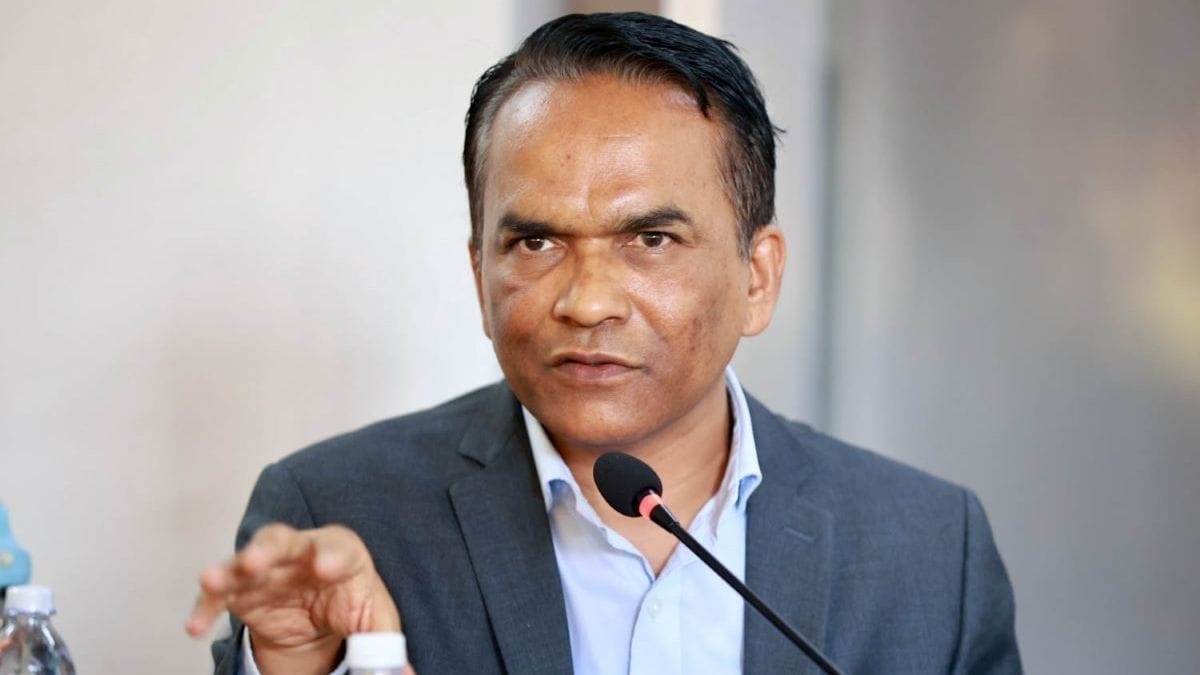
The man tasked with solving that puzzle, Governor Biswo Poudel, provides a historian’s perspective. Large political upheavals, he suggests, rarely lack an economic core. The recent unrest, driven largely by young Nepalis, is a symptom of “economic anger”. This frustration comes from a yawning gap between rising aspirations and stagnant incomes. Today’s Nepalis are globally aware in a way previous generations were not. Through smartphones and family members working abroad, they constantly compare their lives with those in the Gulf, Europe, Australia and North America. They see higher wages as well as better roads and more functional public services elsewhere. The realisation that Nepal’s purchasing power is low, its skilled workers underpaid and its infrastructure weak fuels a deep-seated national disappointment.
Also read: Nepal’s banks are under brutal pressure
The frustration is amplified by a historical legacy of missed opportunities. As an economic historian, Dr Poudel traces a pattern of underachievement back centuries. In the 19th century, whereas India was establishing universities, Nepal’s ruling Rana dynasty amassed great wealth but spent it on religious donations and patronage rather than national modernisation.
Later, early industrial foundations laid by Rana prime ministers lost momentum after the 1950s. The country never industrialised. It produced no transformative inventions and built no significant manufacturing base, leaving it at the bottom of the global economic hierarchy. The bitter irony is that Nepal is not resource-poor. It has methane gas deposits in Dailekh that have been worshipped for centuries, Dr Poudel reckons, but never commercially tapped. It has vast forests that, unlike those in Germany or Finland, have not spawned a timber industry. Its rivers and minerals are mired in political disputes. Tourism potential is largely unharnessed. The fallout is a state with weak revenues, unable to invest properly in health, education, internet access, public transportation, water supply and so on. Citizens feel dependent and trapped.
The present paradox of plenty—money in banks but not in the market—is a consequence of that long-standing failure to mobilise resources. Banks, faced with a dearth of creditworthy borrowers and a shaky real economy, find it safer to park their excess liquidity at the central bank for a 2-3% risk-free return. Credit to the private sector is weak because demand for it is weak. The governor argues that the responsibility for breaking this cycle falls squarely on the state (as the Katmandu Journal has repeatedly argued). He draws a parallel with America’s response to the Great Depression, when massive public investment in projects like the Tennessee Valley Authority stimulated demand and rebuilt economic momentum. Nepal, he contends, needs a similar jolt of state-led capital expenditure.
The country’s record on this front is chronically poor. Capital spending is perennially low, bogged down by bureaucracy and a lack of political will. The governor advocates for a shift from small and incremental budgets to game-changing infrastructure projects. He reels off a list of possibilities: a direct Kathmandu-Pokhara expressway that would cut travel time from six hours to just over one; a Kathmandu-Nijgadh expressway reducing the journey to the plains to 30 minutes; strategic tunnels through the Himalayan foothills. Such projects, he argues, would unlock the economy. Imagine, he says, if the stunning vistas of Mustang or Manang were a mere two-hour drive from Kathmandu. Domestic tourism would boom.
The main obstacle is not money but mechanism. The state lacks the institutional capacity to deploy the funds that are available. A telling example is the Mid-Hill Highway, a nearly 2,000-km road project on which some Rs400bn have been spent. Progress is glacial with many sections receiving tiny annual budgets that ensure perpetual incompletion. The highway has failed to spawn new, revenue-generating towns along its route. The problem, the governor explains, is a culture of poor management and a lack of accountability. Ministries are not monitored rigorously, and a habit of blaming junior officials or local communities substitutes for ministerial responsibility.
This implementation deficit is compounded by a political system designed for caution rather than action. The checks and balances introduced after the end of the monarchy—including powerful parliamentary committees, courts as well as an active anti-corruption commission—were intended to prevent abuse of power. In reality they have created a system with too many veto points, making large, decisive projects difficult to approve and execute. A single leader can drive change only when endowed with concentrated power, Dr Poudel observes. The current cabinet is seen as clean and competent, offering a test of whether better leadership can overcome systemic inertia.
Beyond bricks and mortar, the economy faces far worse underlying ailments. The banking sector is showing signs of strain, particularly in agriculture. Banks have extended hundreds of billions of rupees in loans classified as agricultural, but much of this money is thought to have been misused, funding foreign migration or consumption rather than farming. Genuine farmers, meanwhile, struggle with extreme weather and a collapsed public-support system. At the Lumle Regional Agricultural Research Centre, staff numbers have plummeted from 300 to 23, he observes. Loans given without, say, market access or support can push farmers into distress, provoking land sales.
A similar malaise affects small and medium-sized enterprises, the bedrock of prosperous economies like Germany’s. They struggle to access sensible credit and to grow. Meanwhile very big borrowers accumulate ever more debt, producing a concentration of wealth and a hollowing out of the middle class. This rising inequality feeds the same popular anger that fuelled the September protests. The governor warns that a culture of “evergreening”, rolling over loans to inefficient firms, prevents the creative destruction that allows innovative new companies to emerge.
The recent protests have dealt a severe blow to business confidence. The indiscriminate destruction of private property, including arson attacks on businesses, felt like being struck with a hammer, the governor laments. He distinguishes between the genuine frustration of the young protesters and the criminal opportunism of those who used the chaos to loot and burn. Rebuilding confidence, he argues, calls for the state to reassert the rule of law and make property rights sacred. The fact that some Nepalis feel their assets are safer in India is a damning indictment.
Notwithstanding the formidable challenges, Dr Poudel is an optimist. Even he, after the recent unrest, felt unsafe and considered relocating his family abroad. But he stayed. He points to the visible, if unheralded, progress Kathmandu has made: better roads, an end to chronic power cuts, more hospitals and cafés. The country’s fundamentals, with its strong reserves and deposits, are not the problem. The tragedy is that Nepal did not mobilise these resources more aggressively when it had the chance. The task now is to channel this unused capital into the roads, power lines and factories that can finally unlock the nation’s potential. The money is there. The will, as ever, is the missing ingredient. ■





