
Image via Facebook
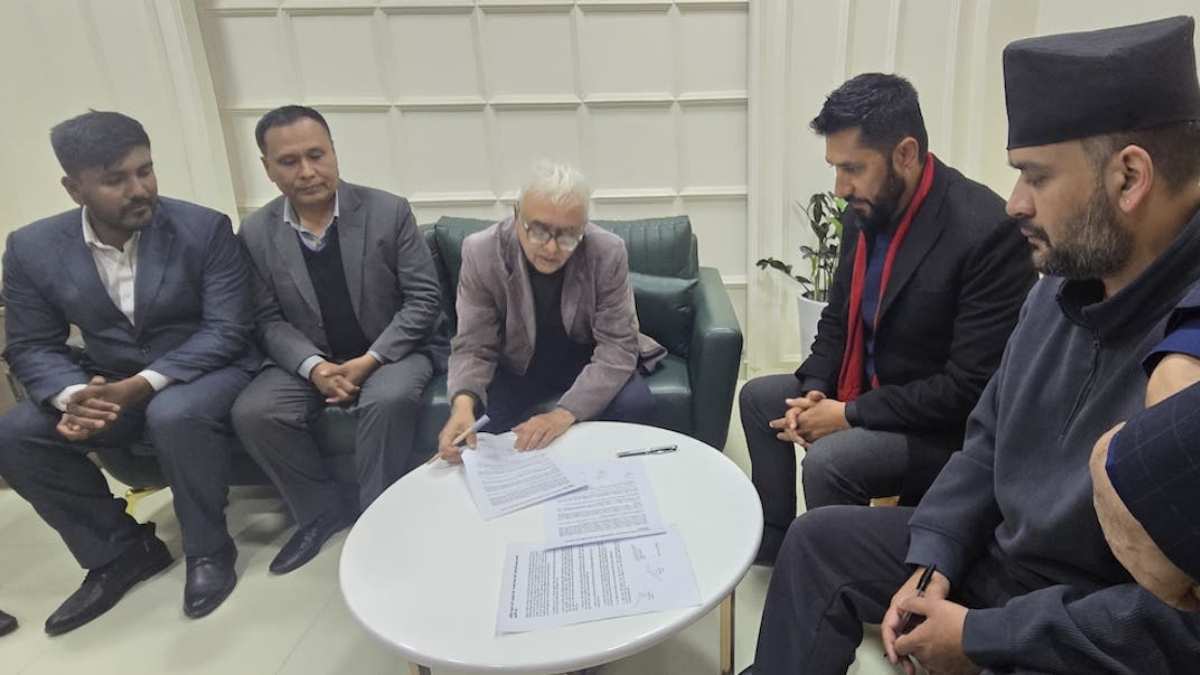
In the end the blue bell did not move. On December 29th as two of Nepal’s most talked-about new political forces formalised a merger, the Rastriya Swatantra Party (RSP) kept its name and its electoral symbol, the ghanti. Voters have grown used to the bell since the party stormed into parliament three years ago. Its retention signals stability. Yet the deal between Rabi Lamichhane’s populist RSP and Kulman Ghising’s technocratic Ujyaalo Nepal Party (UNP) is also an admission that the old arrangements were hollow. Witnessed by Kathmandu’s mayor, Balen Shah (who also signed a separate agreement with the RSP a day earlier), the pact seeks to forge a single credible alternative from Nepal’s fractured anti-establishment scene ahead of March’s general election. It is a marriage of convenience between contrasting political personalities. Whether it produces a unified force—or simply a louder ring—is the key question.
Nepal’s politics have long been run by a tired cycle of parties, descended from former Maoist rebels and traditional parliamentary groups. Their coalitions fracture and reform as easily as sandcastles, guided more by patronage than policy. Into this scene stepped Rabi Lamichhane, a former TV anchor with a knack for connecting with ordinary voters and a flair for disruption. His RSP, founded in 2022, surged to become the fourth-largest party in parliament almost instantly, tapping deep urban and youth frustration. But the party’s path has been uneven. Mr Lamichhane is dogged by legal claims of involvement in cooperative fraud, which he denies. The RSP’s strength is undeniable yet it rests heavily on one man’s personality, leaving its appeal potent but fragile.
Enter Kulman Ghising, a low-key engineer who became a national hero. As managing director of the Nepal Electricity Authority from 2016, he ended the daily blackouts that had crippled the country for years. His calm, effective management turned him into a symbol of technocratic competence in a system weighed down by talk and posturing. After “Gen Z” protests in September brought down KP Sharma Oli’s government, he launched the UNP to turn that reputation into political clout, promising results over rhetoric. The two leaders occupy opposite ends of Nepal’s so-called “alternative” politics: the fiery populist and the steady technocrat. Their alliance seeks to blend popular appeal with proven managerial skill.
The deal lays bare a careful—and fragile—balance. Mr Lamichhane stays party president, holding firm control. Mr Ghising becomes senior vice-president: respected but without real authority. UNP members will join the RSP based on “merit and public image”. One Kathmandu analyst calls it less a merger than an RSP acquisition, with Ghising’s team added as high-grade reinforcements. The pact also invites other “civil, disciplined, reform-oriented” groups to join, seeking to build a wider bloc. The capital’s wildly popular mayor’s backing gives the alliance extra credibility, especially with the young voters who drove his rise.
The consolidation is a rational response to the harsh math of first-past-the-post elections. A divided anti-establishment vote hands seats to the very traditional parties the movement wants to dislodge. By coming together, the RSP seeks to compete seriously across many constituencies. The deal also gives Mr Lamichhane a layer of protection, notes a political consultant in Kathmandu. “Ghising’s clean reputation shields Lamichhane’s legal risks. It lets the RSP claim, ‘We are serious, we have responsible people too.’”
Yet the very differences that give the alliance its strength also make it fragile. Mr Lamichhane is instinctive, media-smart and combative. Mr Ghising is careful, data-driven and consensus-focused. One excites crowds with promises of change; the other earns trust by keeping the lights on. Merging these approaches within one party will test the administrative skill Mr Ghising is known for. Leadership beyond the election remains unresolved. The pact names Mr Shah as the bloc’s future prime ministerial candidate, borrowing his popularity while deferring a clash between Lamichhane and Ghising. It also sets the stage for a possible three-way struggle over the movement’s direction and identity.
For the established parties, this new bloc is a serious threat. For the first time the scattered energy of outsider politics has been shaped into a force with weight as well as a credible claim to govern. The old guard will look to exploit the tensions within, questioning whether a party led by a man facing legal challenges can really deliver clean governance.
The bell is now a shared symbol. For voters, it signals a unifying call for change. For those holding the rope, it tests whether they can move together or whether their different beats will produce only noise. March’s election will judge their experiment. Success could remake the country’s politics; failure will leave the field open for the old players to reclaim their hold. ■




