IMAGE VIA THE KATHMANDU POST
Editor’s note (January 18th 2025): Kathmandu mayor Balendra Shah has resigned from his post.
ON MOST EVENINGS in central Kathmandu the footpaths feel wider than they used to. Food carts no longer sprawl quite so far into the road. Basement car parks, once rented out as noodle shops or phone stores, are again meant for cars. A buried river, written off as a sewer, has been forced back into view beneath the city’s old commercial centre. These changes share a common author. Balendra Shah, known as Balen, has run Kathmandu, Nepal’s capital, by tearing it apart in public.
Now he plans to leave. By the end of January the city’s 15th mayor, elected as an independent in 2022 and barely into his mid-thirties, intends to stand down. Mr Shah does not talk like a man heading home. He talks like one moving on.
Kathmandu had not been short of plans before he arrived. It had been short of consequences. Mr Shah, a structural engineer by training and a rapper by temperament, made consequences his calling card. He turned municipal meetings into live broadcasts, letting voters watch councillors argue in real time. He sent bulldozers after illegal extensions with the zeal of a man settling old scores. He stopped collecting rubbish from Singha Durbar, the federal government’s seat, when ministers failed to help him manage landfill protests. He picked fights that no mayor before him had dared, and seemed to enjoy doing so.
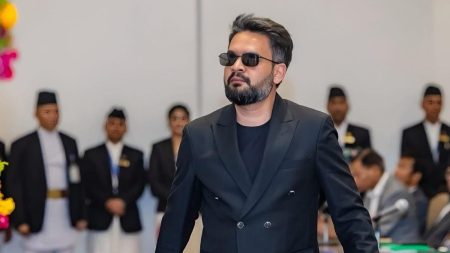
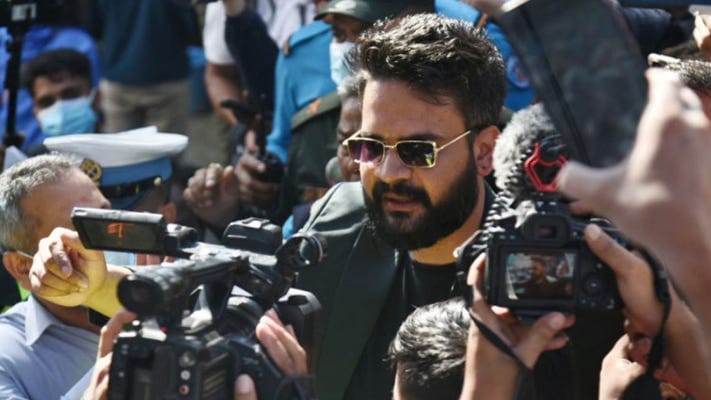
That style made him famous far outside the valley. TIME magazine put him on its list of emerging leaders in 2023. Nepali youths, raised on TikTok and tired of party bosses who never retire, found in him something new: a public official who spoke their language and acted on their complaints. He wore aviator sunglasses and quoted laws like lyrics. And he treated the city as if it were his personal project.
The results were visible. Waste collection, Kathmandu’s perennial humiliation, improved enough for residents to notice. Roads were not fixed overnight, but traffic began to make more sense as parking rules were enforced. Schools introduced “textbook-free Fridays”, trading rote learning for practical skills one day a week. Ward clinics were upgraded to offer free diagnostics and medicines. There was no ideology here—only the systematic destruction of small, infuriating failures.
But the bulldozer solves problems and creates new ones in its wake. Street vendors were chased from pavements, sometimes violently. Riverside squatters were told to leave with little notice and fewer alternatives. Human-rights groups accused the city police of using batons where dialogue would have sufficed. Nearly half of Nepal’s economy is informal; sweeping it off the street does not make it disappear. Mr Shah answered critics by pointing to the law. The law, he said, was not his invention.
His clashes with authority were not limited to the poor. He ordered the removal of police posts built on sidewalks without municipal approval. He marched into Tribhuvan International Airport to dismantle fencing he said lacked permits, provoking a furious response from the Civil Aviation Authority. He threatened, in a moment of temper, to burn down Singha Durbar after his wife’s car was stopped at a security check. He later apologised but the threat stuck. It revealed a man impatient with restraint even when restraint was justified.
That impatience travelled upwards, from the city to the state. In 2023 Mr Shah placed a map of “Greater Nepal” in his office, depicting territories lost to British India in 1816 and now part of modern India. Supporters described it as a response to a mural in India’s new parliament that seemed to show an undivided subcontinent. Indian officials saw provocation. The gesture cost Kathmandu nothing materially, but it raised eyebrows in New Delhi, which is used to managing Nepali nationalism, not being needled by a mayor.
Later came the ban on Indian films after a blockbuster referred to Sita, a figure revered in Nepal, as the daughter of India. Mr Shah ignored a court order to lift the ban, relenting only after a contempt petition was filed. To fans, this was spine. To lawyers, it was recklessness. Either way, it turned a municipal office into a diplomatic irritant.
Such episodes expose the tension at the heart of Mr Shah’s appeal. His strength has been to act where others hesitate. That same impulse makes him brittle when rules push back. Courts slowed his attempt to uncover the Tukucha river, recognising the river’s rights while protecting private property above it. Federal ministries blocked his plans to clear squatter settlements without resettlement. Budget execution lagged behind ambition: less than half of the city’s capital budget was spent in his first years. Running a city, it turned out, still requires cooperation.
Yet it is this blend of competence and confrontation that has propelled him onto the national stage. In December 2025 he joined the Rastriya Swatantra Party (RSP), a young outfit led by Rabi Lamichhane, a former television presenter with a taste for spectacle and a talent for mobilisation. Together they signed a “grand unity” pact that seeks to consolidate Nepal’s anti-establishment vote ahead of elections scheduled for March. Mr Lamichhane brings organisation; Mr Shah brings a cult following.
Also read: Nepal’s new alliance is doomed to repeat the past
The old parties have reason to worry. The Nepali Congress and the communists of the CPN-UML still dominate politics, but their authority has faded, to an extent. Young voters see them as custodians of a system that exports labour and imports excuses. When protests by Generation Z erupted last year over a social-media ban and a systemic corruption, they were not led by party youth wings but by influencers and activists who spoke in memes. Mr Shah understands that crowd instinctively.
The danger is that city-level force does not carry over to running a nation. Clearing a sidewalk is easier than reforming a civil service. Stopping rubbish trucks is easier than fixing intergovernmental finance. Mr Shah has thrived on visible wins and bold defiance. A prime minister needs allies, as well as patience and a tolerance for dull processes. Nepal’s federal structure, still young and fragile, punishes those who confuse speed for power.
There is also the matter of economics. Kathmandu’s clean-up was financed by a city budget and the energy of an outraged middle class. Nepal’s bigger problems are less forgiving. Growth is stagnant and remittances prop up consumption. Populist gestures against India may play well at home, but Nepal’s trade and transit depend heavily on its southern neighbour. A mayor can afford showmanship; a government has fewer props.
Supporters argue that those worries miss the point. Mr Shah, they say, has already shown what Nepal lacks: accountability. By broadcasting meetings and enforcing rules, he lifted expectations. Officials who once hid behind bureaucracy now fear exposure. Even his failures forced conversations that had been postponed for decades, about rivers, land and the uses of public space. If nothing else, he has changed the tone.
Critics reply that tone is not enough. The use of force against vendors and squatters showed a blind spot for equity. His fondness for confrontation risked turning institutions into enemies rather than tools. The city he leaves behind is cleaner and more orderly, but also more anxious, its poorest residents unsure where they fit in the new order. National politics would magnify those tensions.
As January ends, Kathmandu will gain a vacancy and Nepal will gain a candidate. Mr Shah says he is not abandoning the city, merely scaling up his ambitions. The footpaths he cleared may yet lead somewhere else. Whether they end in Singha Durbar or in another cul-de-sac depends on how much of the mayor he is willing to shed.
Nepal has seen firebrands before. It has seen technocrats, too. It has rarely seen one person play both roles at once. The experiment is moving out of the laboratory and into the wild. ■