
TO THE casual observer, Nepal’s banking system exudes strength. In the second quarter of this fiscal year, combined net profits for the country’s 20 commercial banks grew by a respectable 12%, year on year. Deposits have swelled to a record and foreign-exchange reserves are fat enough to cover 18 months of imports. Yet, for many shareholders, those headline figures are deceptive. Investors in Himalayan Bank and NIC Asia Bank are currently staring at a combined distributable deficit of Rs16.5bn. For them the dividend taps have run dry. This jarring contrast, between paper profits and empty pockets, is the hallmark of a necessary, if agonising, sanitisation of the financial system.
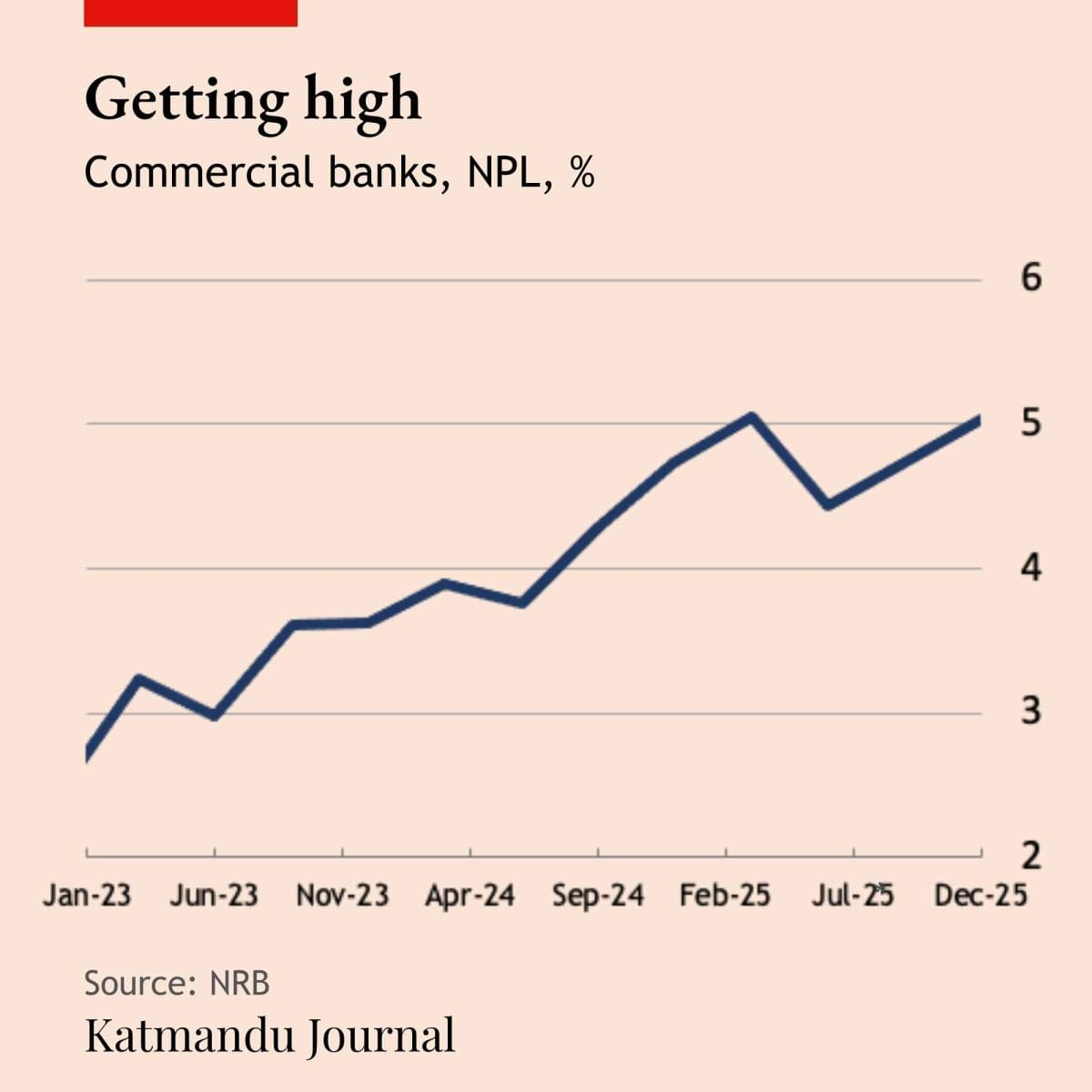
The hangover is the result of a post-pandemic binge. To revive an economy battered by covid-19, the Nepal Rastra Bank, the central bank, encouraged a lending spree. Commercial banks, eager for growth, lunged at the opportunity. But as economic growth has stuttered and the property market has slumped into the doldrums, many of those loans have soured. The sector’s collective non-performing loan (NPL) ratio has nudged past 5% (see chart), up from 4.5% a year ago. For a handful of lenders, it has breached the 7% level, a threshold that should keep central bankers awake at night. To protect themselves banks have been forced to set aside over Rs28bn in “impairment charges”—compared with an average net profit of Rs30bn—provisions that shield the balance sheet but vaporise shareholder returns.
The pain, however, is not distributed equally. The latest results expose a big divide between the sober and the reckless. Nabil Bank remains the sector’s blue-chip benchmark: its profits jumped by 47% while keeping bad loans to a contained 1.7% once provisions were accounted for. Everest Bank is similarly disciplined, boasting a minuscule NPL ratio of 0.68% and a low cost of funds. Both have managed to turn a profit while keeping their books clean.
Then there are those nursing severe indigestion. Himalayan Bank’s troubles were compounded by its merger with Civil Bank; its bad-loan ratio has since doubled to 8%. NIC Asia, once the darling of aggressive growth seekers, has seen its core interest income collapse. Its share price suggests retail investors are still betting on a mythical recovery, wilfully ignoring a Rs7.4bn hole in its retained earnings. All this bifurcation shows the failure of Nepal’s recent “merger mania”. Regulators hoped consolidation would create stability; instead it has just bundled two weak loan books into one larger, more splitting headache.
Adding to the gloom is a growing mountain of “non-banking assets”, mostly seized land and buildings from defaulters. These assets, which have surged in value by more than 60% or so across the sector, are dead capital. They generate no income and tie up regulatory cash. Moreover those assets are nearly impossible to offload in a stagnant property market.
The irony is that the “cleanse” is happening while the system is awash with cash. Remittances are burgeoning at a heady pace and tourists have returned in force. Yet banks are too spooked to lend—or, to put it another way, there are no borrowers, with credit-to-deposit ratios well below regulatory limits. They are essentially drowning in idle liquidity. To fix this mess, chatter is growing around the creation of a “bad bank”, a national asset-management company to buy up toxic loans and foreclosed properties. Such a move would allow commercial lenders to stop acting as debt collectors and return to the business of banking.
The coming quarters will be a test of stamina. A seasonal spike in government spending at the end of the fiscal year may offer some temporary relief, but for the worst-hit institutions, a return to dividends this year is a fantasy. Nepal’s banking sector is not on the brink of collapse: it is too liquid and well-capitalised for that. But it is in the midst of a “great sanitisation”. The reckless expansion of the past is being scrubbed away, one painful provision after another—a reminder that in finance, as in hygiene, deep cleans are rarely painless. ■





