
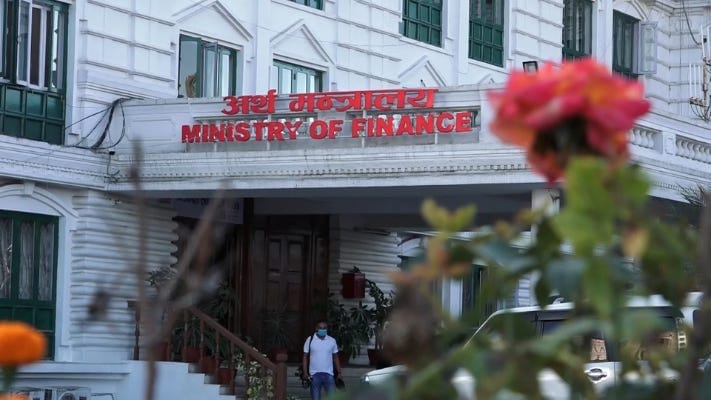
IMAGE VIA GOOGLE
IN THE committee rooms of Kathmandu, where Nepal’s fractious political class spends much of its energy on the mechanics of survival, the conversation these days is about what is going right. Foreign-exchange reserves are at a record $22.5bn, enough to pay for nearly two years of imports. The current account is in surplus. Inflation is tamed. After years of living on the edge of a balance-of-payments crisis, the macroeconomic headlines have rarely looked so reassuring. Politicians from the Prime Minister down are happy to take a bow.
The truth is uglier. Beneath the comfort of the headline numbers, a different sort of crisis is taking shape, which nobody in power seems willing to name. In the past five years, Nepal’s domestic government debt has more than doubled, from Rs613bn to Rs1.27tn. The cost of servicing that debt now eats up more than a quarter of all government revenue, up from 14% before the pandemic. That is above the threshold where multilateral lenders start to worry. And for the first time in the country’s modern fiscal history, Nepal now owes almost as much to domestic creditors as it does to the soft-loan arms of the World Bank and the Asian Development Bank. And it has happened with almost no public debate.
The silence is not accidental. Nepal’s politicians have learned that debt is a subject best left unspoken when the news is otherwise good. The total debt-to-GDP ratio, at 43.7%, is below the 60% that sets off alarm bells at the IMF. So the comfortable narrative persists: the patient is healthy, the vital signs are strong and there is no need to look too closely at the blood work.
But the blood work shows something else. Concessional loans from multilaterals carry interest rates of 1-2% and maturities measured in decades. Domestic debt is shorter, more expensive and crowds out the private investment that Nepal desperately needs. When the government issues treasury bills at 9.5%, as it did during the liquidity squeeze of 2022-23, it is not just financing itself: it is sucking savings out of a shallow capital pool and leaving less for the factory owner in Biratnagar or the hotelier in Pokhara. That cost does not appear in the reserves figures. It appears in the growth that never happens.
The consequences are visible in the budget. Debt service has grown 191% in eight years. Capital spending, the money that builds roads and schools, has barely budged. The government is borrowing more than ever to pay for the borrowing it did yesterday, while investing less in the capacity to generate tomorrow’s tax revenues. That is the classic signature of a fiscal machine that has begun to eat itself. It is not yet a crisis. But it is a trajectory that leads to one, and the time to change course is when the external position is strong, not when the remittance tap is suddenly turned off.
That tap is the single point of vulnerability. Nepal’s entire fiscal and monetary stability rests on the monthly flow of Rs140bn from workers in the Gulf. A sustained oil-price collapse, a regional recession, a bout of xenophobia in the host countries: any of these could snap the remittance line. When that happens, the current account reverses, the banking system dries up and the government faces a revenue shortfall just as its borrowing costs spike. In that moment, a debt stock that is short-dated and expensively priced becomes a very dangerous thing to hold. The 2021-22 liquidity crisis was a mild preview. With domestic debt twice as big, the sequel would be anything but.
None of this means you should panic. But what Nepal needs to do is tie every new rupee of borrowing to a visible rupee of capital investment, so that debt finances the future rather than the past. And it needs politicians who can talk about these things without waiting for a crisis to force the conversation.
The silence in Kathmandu will not last forever. Eventually the reassuring headlines will give way to something else. The question is if leaders will break the silence on their own terms, from a position of strength, or wait until the reserves are no longer a comfort and the debt is no longer manageable. Fiscal silence is not the same as fiscal health. It is merely the calm before the numbers force the truth. ■





