IMAGE: AP
EVERY MONTH a Nepali labourer in Doha or Dubai wires a few hundred dollars home. The sum is small; the mechanism is a feat of trust and plumbing. Banks in the Gulf, in London, in New York pass the payment along correspondent chains until it lands in a rupee account in Kathmandu. This boring circuitry keeps over half of Nepal’s households afloat and provides two-thirds of the country’s convertible foreign exchange. In the 2024–25 fiscal year, remittance inflows reached $12.64 billion, according to the Nepal Rastra Bank, a 16.3% year on year rise. Yet that system is under growing threat. The global watchdog that polices dirty money has all but run out of patience, and Nepal’s political class is responding with its customary blend of complacency and drift. The chain is beginning to fray.
Nepal was placed on the Financial Action Task Force’s grey list in February 2025. That was a warning. The grey list signals “strategic” deficiencies in tackling money-laundering and terrorist financing; it does not trigger automatic countermeasures. But it gives a country two years to fix the problems, or risk being pushed onto the blacklist.
The Asia/Pacific Group, which monitors compliance, has delivered a verdict that should terrify anyone who depends on a functioning bank account. Last October the FATF decided to keep Nepal on the grey list, noting that “although Nepal has made continued efforts to strengthen its systems, the progress has not been sufficient to secure its removal”.
Worse, a confidential briefing note prepared by the APG Secretariat and obtained by the Kathmandu Post this week warns that the big moment will come in September. If Nepal fails to show substantial progress by that review, it risks being pushed into the blacklist—a club whose three permanent members are Iran, North Korea and Myanmar. To borrow a phrase from another unlucky jurisdiction, we are all Argentina now. Only this time it would be Nepal.
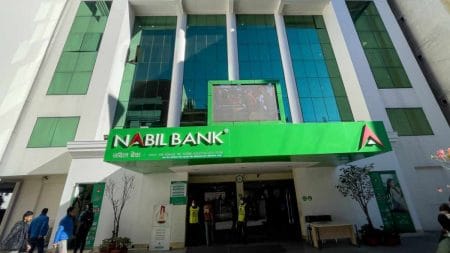
Blacklisting would be an economic amputation. It would sever correspondent banking ties, making it nearly impossible to open letters of credit for petrol, medicines and industrial inputs. Remittances would grow costlier and slower; and a growing share would leak out of formal channels into hundi, the trust-based hawala networks that already handle a big share of flows. The anti-money-laundering regime would accelerate the very informalisation it exists to combat.
Worse still, the country’s brightest economic spot—its digital and IT-services exports—would be extinguished. Global clients do not route payments to blacklisted jurisdictions. Fintech partnerships would come under severe strain. (The partnership linking Nepal’s Fonepay to Alipay+ was launched after the grey-listing, but its long-term viability would be in doubt under a blacklist scenario.) The software developers and entrepreneurs who have begun to wire rupees from abroad would just incorporate elsewhere. Talent, being mobile, would follow the money.
The wider damage would unfold with the steady logic of a slow-motion train wreck. Foreign direct investment, already wilting—down sharply year on year even without blacklisting—would collapse beyond a few Chinese state-backed hydropower deals. Tourism, which earned Rs88.66 billion in the 2024–25 fiscal year, would face payment-card glitches, as well as pricier insurance and the stigma of a destination that appears on the same list as Pyongyang.
A move to the blacklist would almost certainly trigger a downgrade of a hard-won sovereign credit rating of BB-, yanking up the cost of external borrowing at a time when Nepal’s public debt has already leapt to nearly 45% of GDP. Concessional loans from the World Bank and IMF would grow stingier, tied to compliance benchmarks that the state has so far been unable to meet.
Why is a country so dependent on its global financial wiring treating the deadline with the urgency of a village council meeting? Because its anti-money-laundering regime is fragmented across half a dozen agencies that rarely co-ordinate. Prosecuting complex cases and exposing beneficial ownership would mean shining a light on politically connected business networks that have thrived in the shadows. That is what the action plan demands.
The Gen Z uprising of September 2025, which forced snap elections in December and a change of government, furnished a convenient excuse for delay. But the truth is plainer. Reform threatens the interests of those who would have to enact it.
Geopolitics tightens the knot. India, Nepal’s dominant trade partner and the destination for most of its rupee-pegged trade, would face its own compliance headaches as banks reassess their exposure. China, which has deepened its hydropower investments and signed Belt and Road agreements, might offer bilateral financial workarounds—but at the price of greater dependency. Nepal’s delicate balancing act between the two Asian giants would tilt, perhaps irreversibly, towards whichever power is willing to tolerate a higher tolerance for regulatory squalor.
There is a path out. The government would need to treat the coming months as a national financial emergency: strengthen the Financial Information Unit; push through prosecutions of serious money-laundering cases; impose real supervision on casinos, co-operatives and real estate; and establish a register of who actually owns what. International technical help is on offer. What is missing is the guts to use it.
The labourer in the Gulf does not read FATF communiqués. But he will feel the consequences in higher fees and longer waits. When the formal pipes clog, the informal ones hum. For a country whose modern economy is a network of wires stretching from Doha to Dubai to London, being unplugged is not just a reputational blow. It is a slow suffocation of the main artery that keeps millions afloat.
The blacklist would mark the moment Nepal turned a solvable problem into a self-inflicted isolation. The world’s financial architecture rarely forgives countries that cannot be trusted with money, especially when the money belongs to people who scrub floors in foreign cities. ■