IMAGE: REUTERS
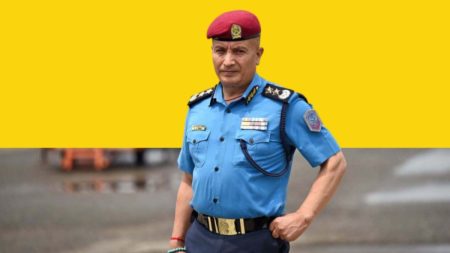
ON NOVEMBER 4TH Nepal’s government binned its police chief, Dan Bahadur Karki, and handed him a new job advising the prime minister on security. He had 17 months left as inspector general. Manoj Kumar KC, a fellow member of the 1998 police intake, took his place. The government offered bugger all explanation for the sudden departure. Instead it invented a special post for Mr Karki at the Prime Minister’s Office and disguised the move as a change of duties.
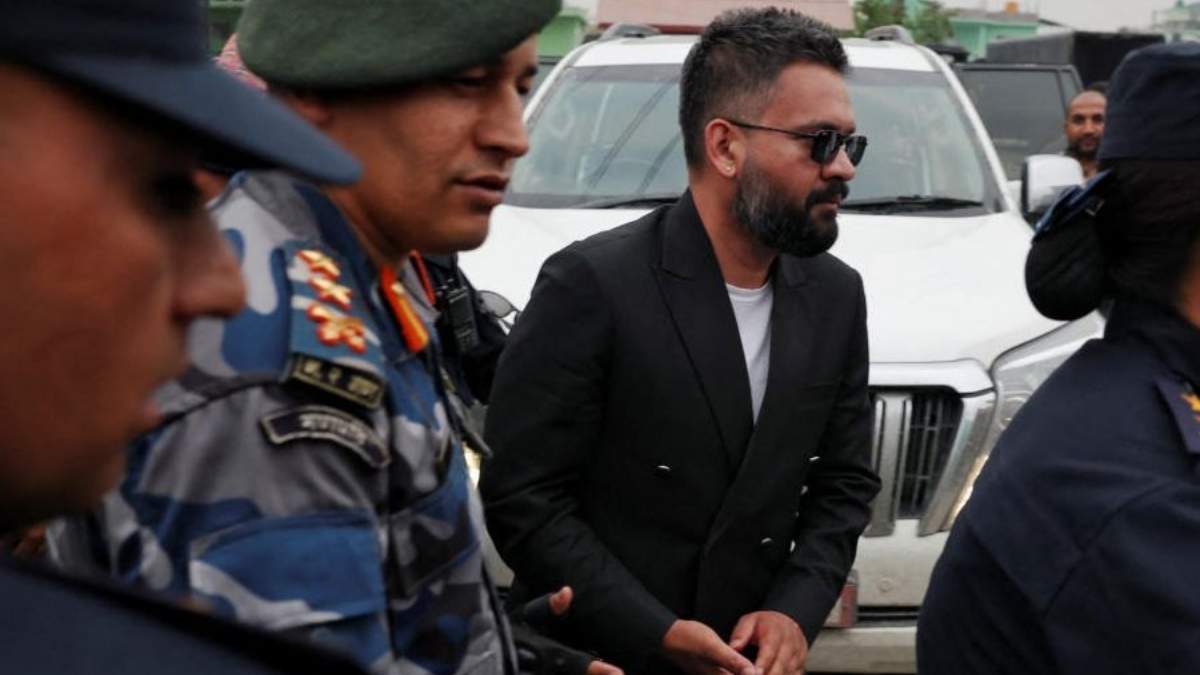
The timing stinks. The dispute had grown around Inam Sapkota, an alleged fixer arrested over suspected money-laundering and banking offences. Mr Sapkota claimed access to senior politicians, judges and security officials. His name hit public view after messages between him and Supreme Court justices raised questions about attempts to influence court cases. The affair has since dragged people close to Prime Minister Balendra Shah into the muck.
Justice Hari Prasad Phuyal told journalists that Mr Sapkota had introduced himself as someone working for Mr Shah. The intermediary claimed he could protect judges from impeachment and had access to the ruling party’s leadership. Mr Phuyal said Sapkota later approached him about cases before the courts. The judge denied any financial dealings or agreement to influence judicial decisions and called for a full investigation.
Messages published by Naya Patrika on October 29th offered a closer look. Mr Sapkota sent Mr Phuyal a screenshot of a petition involving businessman Rohit Gupta. He then invoked the prime minister’s interest in the case and asked the judge to dismiss it. Mr Phuyal replied that there were grounds to release Gupta on bail. A joint bench subsequently ordered Gupta’s release on September 2nd against bail of Rs20m.
The messages prove zero about Mr Shah directing the approach or the judge acting improperly. They do show how an intermediary could invoke the prime minister’s name while contacting a sitting Supreme Court justice. That is troubling enough. A government cannot let people trade on claims of access to its leadership without establishing who, if anyone, authorised them to speak on its behalf.
Mr Phuyal said he and other judges eventually compared experiences and reported their concerns to the Prime Minister’s Office and the army chief’s secretariat. The government office reportedly replied that it had heard rumours about Mr Sapkota but had no information showing its officials knew him. A fixer can invent influence. But when his claims reach the highest court, the government has a duty to establish how he acquired such credibility.
The police investigation soon got tangled in the political fallout. Reports emerged that Kumar (Ben) Byanjankar, Mr Shah’s chief adviser, had kept Mr Sapkota’s mobile phone for two days after his arrest. A government official told the Kathmandu Post that the incident further enraged the Prime Minister’s Office. The reported handling of the phone raised questions about access to evidence held by investigators. The allegations have yet to establish wrongdoing by Mr Byanjankar. The government has offered precious little detail about what happened.
The treatment of journalists made matters worse. On October 30th plain-clothes police officers detained Bishwamani Subedi of Nepal Press, Shobharaj Baral of Motive News and Dhiraj Basnet of DNA Khabar. Officers also stormed the offices of Naya Patrika and Diyo Post hunting reporters. The police said they wanted to question journalists over reports concerning the force. Their statement referred to concerns raised by the Prime Minister’s Office about coverage that could damage public confidence in the police.
Mr Shah’s office denied prior knowledge of the detentions. His communications adviser, Dipa Dahal, said the prime minister had ordered the journalists’ immediate release and instructed authorities to stop entering newsrooms to detain reporters. The intervention was welcome. Yet it raised another question: why had police officers thought arresting journalists was an acceptable response to reporting that embarrassed the government?
The government then removed the police chief at the centre of the dispute. Mr Shah had reportedly sought Mr Karki’s departure the previous week, partly over suspected links between the inspector general and Mr Sapkota. The government has produced zero clear evidence of misconduct by Mr Karki. Nor has it explained why a formal disciplinary process was unnecessary. Instead it transferred him to the Prime Minister’s Office. Home Minister Sudan Gurung personally pinned the insignia on Mr KC, who had ranked third in the police hierarchy.
Nepal has already seen this kind of political interference. In 1997 the government of Lokendra Bahadur Chand transferred police chief Achyut Krishna Kharel and appointed Dhruba Bahadur Pradhan in his place. Mr Kharel challenged the decision. The Supreme Court ruled that arbitrarily removing an inspector general violated the rule of law. It warned that political control over police appointments would weaken the force’s independence.
Senior advocate Tikaram Bhattarai, who represented Mr Kharel, says the legal principles governing the appointment and removal of police chiefs have changed little since. An inspector general cannot be removed at the government’s whim. Officials need objective grounds and must give the officer an opportunity to be heard.
Mr Karki has approached the Supreme Court seeking reinstatement, arguing his removal was unlawful. His petition had been submitted but had yet to be registered as of November 5th. The court will now have to consider the government’s powers over senior police appointments and the precedent set almost three decades ago.
Mr Shah won power by promising to smash a political class that treated public institutions as party property. His appeal rested on the idea that Nepal needed a government willing to challenge powerful people. The police affair puts that promise under strain.
The police investigate politicians and businessmen. They decide which complaints receive attention and which suspects face questioning. Their chief must be able to pursue a case involving people close to the prime minister without calculating the consequences for his career. A force that fears its political masters will struggle to investigate them.
The economic cost is tougher to see but just as real. Businesses need predictable law enforcement. Investors need confidence that disputes will be handled on their merits rather than through political connections. A police service that answers to the prime minister’s circle instead of the law makes both harder to secure.
Mr Shah may yet establish that his government had zero part in Mr Sapkota’s alleged dealings. He may also produce evidence that Mr Karki was unfit to lead the force. But those claims need an independent investigation and a process that can withstand scrutiny. For a prime minister elected on promises of clean government, the test is basic: can his own associates face investigation without the investigators losing their jobs? ■