IMAGE: KHABARHUB
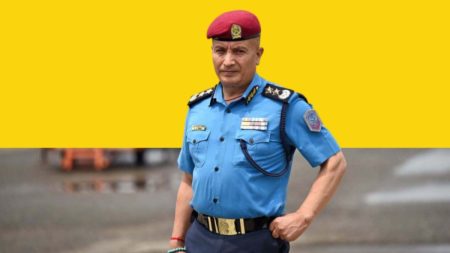
BALENDRA SHAH built chunks of his political reputation by picking fights with India. As Kathmandu’s mayor, he stuck a map of Greater Nepal in his office after India published a map swallowing disputed territories. He also moved to ban Indian films in Kathmandu. Such stunts thrilled Nepalis fed up with what they see as India’s habit of treating their country like a junior partner.
Now Shah is packing for New Delhi as prime minister. The trip, expected from November 22nd to 25th, will be his first official bilateral foreign visit since taking office in March. He meets Narendra Modi on November 23rd. The agenda is stuffed with subjects that make nationalist chest-thumping look stupid: money for flood reconstruction, electricity exports, trade routes and access to international airports.
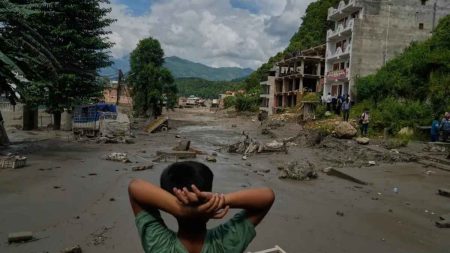
The timing stinks with pressure. Nepal is begging for more than $2bn in Indian assistance after the devastating August floods in the Rasuwa-Bhotekoshi corridor. Its proposal includes $1bn in concessional loans, $500m in grants and another $500m for reconstruction. India has muttered willingness to consider the request, but the amount and terms remain up in the air. Kathmandu needs the money. New Delhi bloody well knows it.
India’s importance goes way beyond emergency handouts. It is Nepal’s largest trading partner and the principal route through which the landlocked country reaches global markets. Nepal depends on Indian ports and transit arrangements for much of its overseas trade. Its electricity exports lean heavily on access to India’s grid. A diplomatic tantrum can become an economic disaster with remarkable speed.
Shah’s government seems to grasp this. During Indian foreign secretary Vikram Misri’s visit to Kathmandu on November 4th and 5th, officials jawed about trade, hydropower, development assistance, energy and connectivity. The two sides also poked at cooperation in digital technology, artificial intelligence and start-ups. The joint statement described the relationship in sugary terms. The agenda was practical, the language carefully restrained.
Finance minister Swarnim Wagle had already signalled a shift. Speaking at the NDTV World Summit in New Delhi on October 23rd, he declared the era in which Nepali nationalism was tied to anti-India sentiment dead. His message: cooperation with India should be judged by economic results rather than old political reflexes. That is a sensible position for a government trying to pull in investment and expand exports.
Yet the ugly questions fester. Nepal wants additional air-entry routes for its international airports in Bhairahawa and Pokhara. Both have struggled to attract international flights partly because of restrictions on suitable routes through Indian airspace. Nepal has been begging since 2014. A favourable decision could improve the commercial prospects of airports that have swallowed massive public investment. Another round of sympathetic statements achieves sweet bugger all.
The Pancheshwar Multipurpose Project is another test. Agreed under the 1996 Mahakali Treaty, the proposed hydropower and irrigation scheme has spent decades stuck in negotiations over costs and the sharing of benefits from water resources. The two sides have reportedly narrowed differences over construction costs, but the distribution of water-related benefits remains unresolved. If Shah can secure a timetable for decisions, the visit will have produced something more useful than ceremonial hot air.
Border disputes are politically harder. Nepal claims Kalapani, Limpiyadhura and Lipulekh, territories administered by India. Shah has previously taken a loud public position on the issue. Yet the subject was conspicuously absent from discussions during Misri’s visit. Indian officials have little appetite for reopening a dispute that could overshadow the economic agenda. Nepali officials hope it will feature in the prime ministerial talks, but there is zero guarantee of progress.
The temptation for Shah will be to present any compromise as a diplomatic triumph. He should resist turning the visit into a test of personal toughness. Nepal cannot alter its geography, and India cannot expect a stable neighbour to swallow every Indian preference. A workable relationship requires both sides to recognise that dependence runs in different directions, even if the balance of power tilts heavily towards New Delhi.
India needs Nepal’s cooperation on border security and regional connectivity. It also wants access to Nepal’s hydropower potential as it expands its own clean-energy capacity. Nepal can use those interests to negotiate better terms. But bargaining power comes from credible projects and reliable institutions, rather than speeches about sovereignty.
For years Nepali politicians have used India to demonstrate their nationalist credentials at home. Shah now has a chance to show that sovereignty can also mean securing better terms for his country. The challenge is to deal with India’s power without pretending it does not exist. ■