IMAGE VIA PINTEREST
ABU DHABI’S property market is pulling in more than wealthy punters hunting a second home or investors chasing rental yields. The latest figures point to a bigger shift: international private wealth, family offices and institutional money increasingly treat the emirate as a place to plant a long-term flag. In other words, a market built around global capital behaves differently from one driven by speculative flipping.
By November 12th, the evidence was splattered across the transaction data. Abu Dhabi recorded Dh171.26bn in property transactions in the first nine months of 2026, a 76.1% jump on the same period a year earlier. Foreign investment in designated investment zones rose 131% to Dh86.11bn. Direct investment by non-resident individuals hit Dh17.22bn, already more than double the full-year total for 2025.
The buyers come from a wider pool. Investors from 121 nationalities participated in the non-resident market during the first nine months, with Britain, China, Russia, America, France and Germany among the leading sources. In the first half of the year, resident expatriates and non-resident foreign buyers together accounted for 70% of residential sales value. That figure deserves a hard stare: it includes expatriates already living in the emirate, not just overseas buyers alone.
The change is seen at the expensive end. Savills recorded a 35% quarterly increase in transactions above Dh10m during the third quarter. Its research also found residential transaction volumes had fallen 19% from the previous quarter, even as prices held up. Buyers were getting pickier, with demand concentrating in luxury and off-plan properties. The market was pulling in larger sums even as activity cooled.
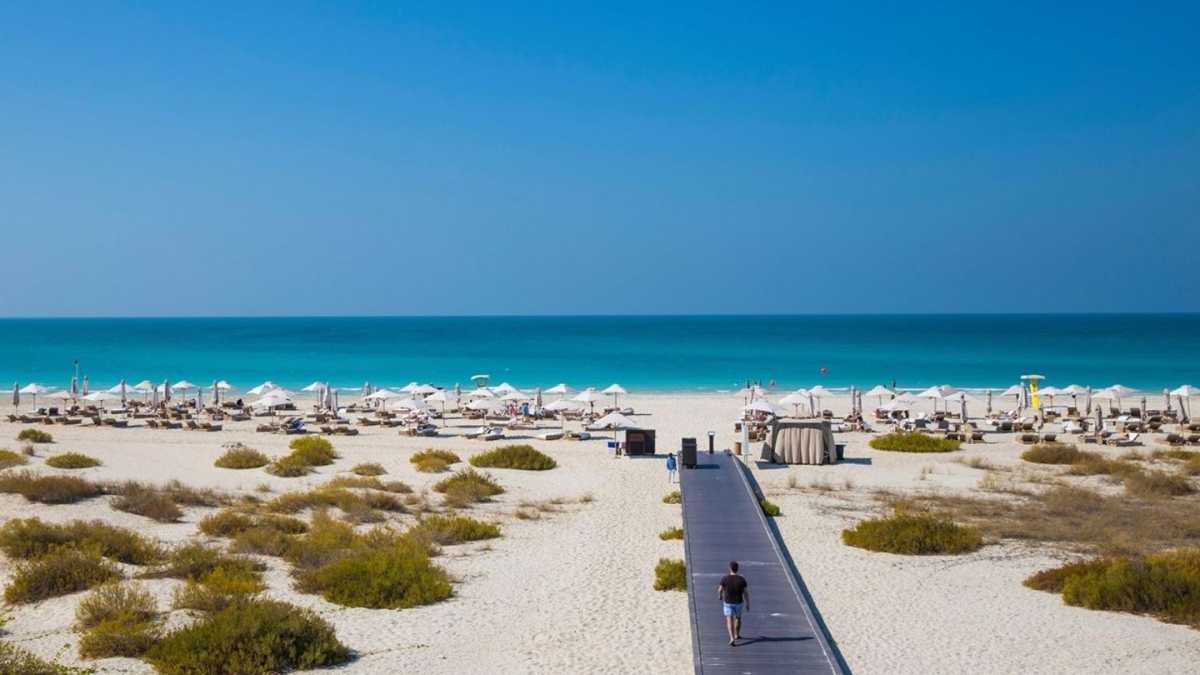
Saadiyat Island illustrates the appeal. Its beaches and cultural institutions, including the Louvre Abu Dhabi and the newly opened Zayed National Museum, give it an identity beyond a pile of residential towers. The island has become a magnet for buyers who pay a premium for culture, privacy and waterfront living. Aldar’s Louvre-branded residences sold all 422 homes, proof of the commercial value in slapping a cultural institution’s name on a property.
Hudayriyat Island offers a different pitch. Its large-scale waterfront and sports developments appeal to buyers craving space and a planned lifestyle. Modon sold 1,700 homes at Hudayriyat Golf Estates within days of launch, according to Knight Frank. Yas Island has its entertainment infrastructure, while Al Reem Island and Al Maryah Island offer proximity to the financial district and Abu Dhabi Global Market (ADGM).
The financial ecosystem matters. ADGM operates under English common law and has become a base for asset managers, wealth advisers, investment firms and family offices. Abu Dhabi’s sovereign investment institutions, including ADIA, Mubadala and ADQ, have helped build an international financial network around the capital. Their investments differ from residential property purchases, yet the wider ecosystem attracts executives and wealthy families who need homes, offices and services. Real estate benefits from the arrival of people and businesses whose capital was already mobile.
This source of demand differs from the traditional property investor. A buyer purchasing a flat for rental income compares yields and resale prospects. A family office establishing a regional base may also value schools, healthcare, legal structures, connectivity and the security of assets. A senior finance executive moving to ADGM may need a home close to work. These decisions can create demand for years, rather than for the duration of a short investment cycle.
The shift also explains the appeal of branded residences and premium developments. International buyers recognise familiar names and may pay a premium for a property linked to a hotel, luxury brand or cultural institution. Developers have responded with projects that sell an experience as much as a floor plan. The risk is that branding disguises ordinary property economics. A recognisable name guarantees rental income, resale liquidity or sensible entry prices.
There are reasons to stay wary. Off-plan properties accounted for 89% of residential sales value in the first half of 2026. Ten developers captured 90% of primary off-plan sales, according to the Abu Dhabi Real Estate Centre. Such concentration makes delivery schedules and developer execution especially important. Around 71,000 additional homes are projected by 2030, with completions expected to peak in 2028. If supply arrives faster than population and employment growth, even a wealthier buyer base may struggle to absorb it.
The market also has to separate long-term capital from money riding a favourable cycle. Foreign investment can surge when investors see political stability, attractive prices and a welcoming regulatory environment. It can also retreat when regional tensions intensify or global financial conditions shift. Abu Dhabi has continued to attract capital despite the conflict involving Iran, but geopolitical risk is part of the calculation, an inconvenience that can be ignored.
The emirate is building a property market around a wider ambition: to become a home for global wealth, rather than simply a place where wealthy foreigners buy apartments. That ambition gives its real-estate boom a deeper foundation. It also raises the standard by which the market should be judged. The test will be the number of families, firms and skilled workers who choose to stay, the value of homes sold before they are built. ■