IMAGE: ANTONIO NODAR
AT AROUND 7pm on September 22nd 2022, Jerusha Rai left her family home in Lalitpur. She left her mobile phone behind. She did not come back that night.
Her mother found a note in her room. By the following morning the family had reported her missing. What followed involved CCTV footage, trained dogs, river searches, volunteer teams and reported sightings across several districts. None of it produced a confirmed answer.
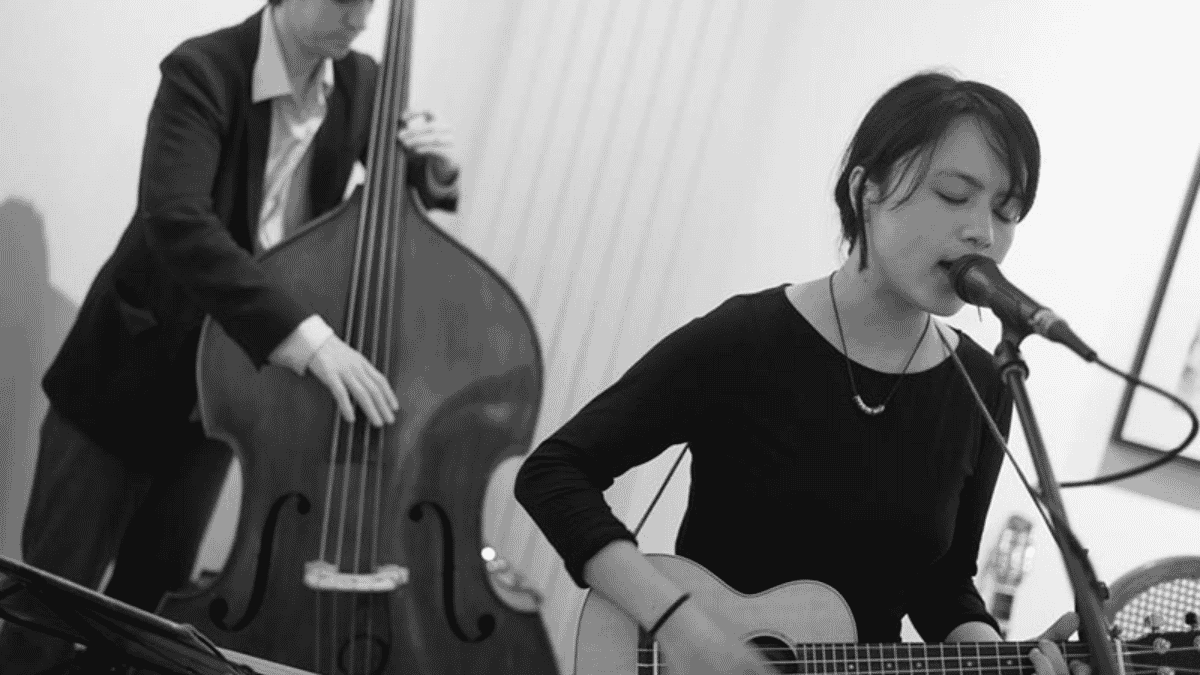
Rai was 30 and already established in Nepal’s independent music scene. She had begun uploading English-language covers to YouTube in 2011 before developing her own sound, mixing pop, rock and folk. Her 2017 song Barud drew attention for confronting the violence of Nepal’s Maoist conflict.
Her disappearance survives on a handful of clues, physical and digital. Each points to a possible route. None establishes where she ended up.
Police rebuilt Rai’s movements from CCTV. Footage showed her walking alone in Dhobighat at around 7.30pm. Subsequent reporting placed her on a route towards the Bagmati, near the footbridge leading towards the Tribhuvan University area in Kirtipur.
She wore a black T-shirt and trousers, according to the initial police account. She carried no visible bag. Investigators traced her towards the river corridor, and there the publicly reported CCTV trail stops. No later footage establishes where she went.
That gap is the whole problem. A camera can prove someone passed a point. It cannot prove what happened once they walked out of frame.
The note
The paper found in Rai’s room gave investigators a second lead. Reports described it as a farewell note, with language suggesting she intended to disappear from the world and that nobody else bore responsibility for the decision. It mentioned the Bagmati. The note justified searching the river. It did not prove she entered it.
Police searched the surrounding area, including the Chobhar corridor. Divers went in. Trained dogs worked possible routes. Volunteers organised searches, including drone operations around Chobhar. The effort spread to Pharping, Dakshinkali, Tikabhairav and Katuwal Daha. The river search produced no publicly reported recovery of a body or belongings that settled what happened to her.
A forensic examination of Rai’s laptop produced one of the most significant findings. A report by Onlinekhabar in September 2024 said investigators had found a previous internet search concerning drowning. The note, the Bagmati reference and the search history strengthened the police theory that she may have gone into the river.
The limits are obvious. A search query records what someone typed, not what followed. A note records what its author wrote, not whether the decision was carried out. Neither substitutes for physical evidence.
One complication cut both ways: Rai left her phone at home. That removed a potentially useful source of location and communication records from the immediate investigation. Public reporting offers no complete account of the digital examination, including the precise timeline of her laptop activity or the full results of other forensic work.
The alternative leads
The investigation did not fixate on the river. Police examined reports from people who believed they had seen Rai elsewhere. In the first week, sightings came in around Chobhar, Pharping and other areas south of Kathmandu. Investigators followed up. The reports produced no confirmed identification.
Her family kept another possibility open: that Rai had deliberately withdrawn from ordinary life. Her mother told Onlinekhabar that her daughter had visited monasteries before and expressed interest in becoming a nun. She believed Rai might have sought refuge in a religious community.
A reported sighting in Chitwan in 2023 briefly raised hopes. The family examined it and concluded the woman was not Rai. Other claims circulating on social media went nowhere.
A sighting is not an identification. In a missing-person case, a stranger’s description is a lead. It becomes evidence only after photographs, witnesses, records or other reliable material corroborate it.
The family had reported that Rai experienced emotional difficulties and sought medical treatment. Investigators considered that background. It cannot, by itself, establish her intentions or explain her disappearance. Nor does it rule out the possibility that she survived and chose to stay out of contact.
The latest detailed public account located for this article, published by Onlinekhabar in September 2025, said the family was still waiting and police had not abandoned the search. No later publicly verified development has established her whereabouts as of November 13th 2026.
Four years on, the investigation faces a basic evidentiary dead end. There is a last known route, a note, a digital trail and a series of searches. There is no publicly confirmed final location, no verified account of what happened after the CCTV footage ended and no conclusive evidence establishing her fate.
The river remains one possible explanation. A religious retreat or deliberate disappearance remains another. Neither has been proved.
For her family, the absence of an answer is the enduring reality. For investigators, the case hinges on a question the available evidence has yet to resolve: where did Jerusha Rai go after the cameras lost sight of her? ■