IMAGE: NARENDRA MODI/FACEBOOK
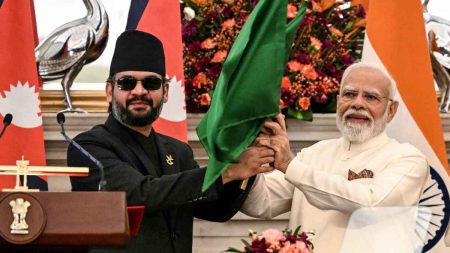
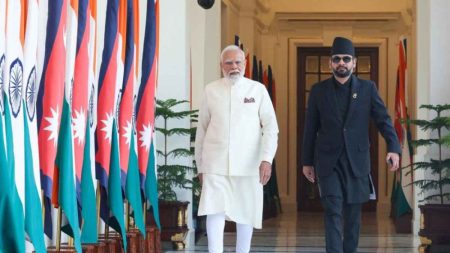
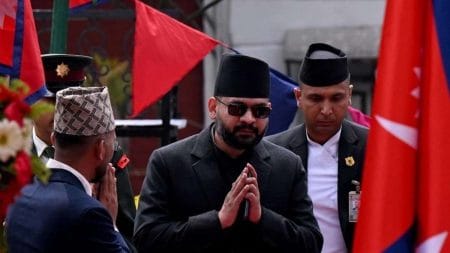
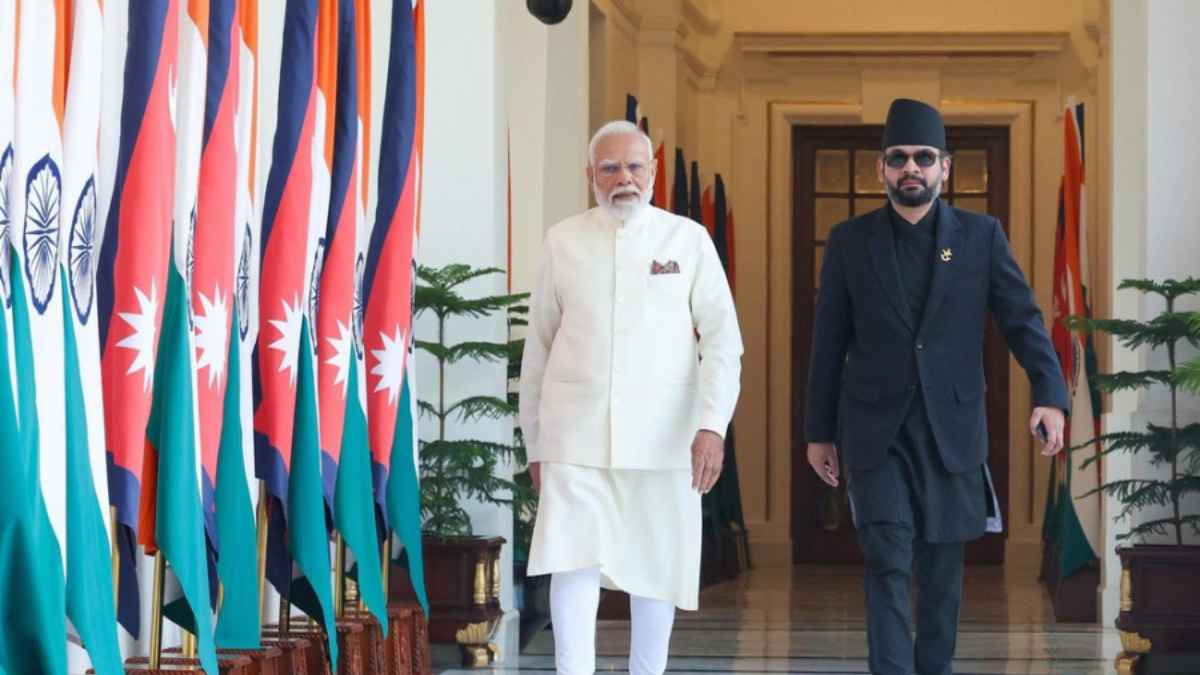
ON NOVEMBER 23rdrd Narendra Modi and Balendra Shah announced a new vision for India–Nepal relations. The headline was an INR150bn development-assistance package — about NPR240bn — the biggest India has ever announced for Nepal. The more important part was the plan to rewire the economic relationship: cross-border industrial zones, new petroleum pipelines, more electricity trade and faster digital payments. For a landlocked country whose biggest trading partner is also its main transit route, that is not a small shift.
India already dominates Nepal’s economy. Bilateral merchandise trade hit $9.38bn in the 2025–26 financial year — more than 60% of Nepal’s external goods trade. India buys over 80% of Nepal’s merchandise exports and supplies most of its imported petroleum. Indian companies have invested an estimated $800m across about 150 ventures, making India Nepal’s biggest foreign investor. Geography gave India a commercial grip that China cannot easily copy.
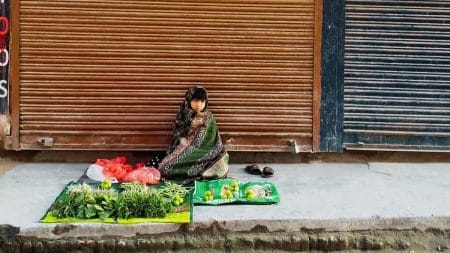
The relationship is lopsided. Nepal imported NPR1.21trn of goods from India in 2025–26 and exported only NPR258.65bn. The bilateral trade deficit hit NPR951.95bn. That is the ugly core: access to a huge market has created far more room for Indian manufacturers than for Nepali producers.
Nepal’s export list exposes the weakness. Refined soybean, palm and sunflower oil made up 57.59% of exports to India in 2025–26. Much of that trade means importing crude edible oil, processing it in Nepal and selling the refined product across the border. The industry lives off tariff preferences available to Nepal. It does not prove Nepal has built a real manufacturing base. One change in Indian tariff treatment could gut one of Nepal’s biggest export earners.
Shah’s visit opens a chance to attack that imbalance. The two governments agreed to explore cross-border special economic zones near the Indian border so Nepali manufacturers can plug into Indian supply chains. Those zones could pull in factories making processed farm goods and industrial parts for the Indian market. They will work only with fast customs clearance and rules investors can predict. Nepal has spent years failing to turn cheap labour and preferential market access into a serious manufacturing base.
Energy is the immediate commercial opening. Nepal exported electricity worth NPR29.32bn to India and Bangladesh in 2025–26 against imports of NPR10.55bn. The NPR18.76bn surplus is a real change for a country that spent years buying power from India in the dry season. Average exports hit around 1,000 megawatts with hydropower output rising in the monsoon.
The new agreement aims to expand that trade with more transmission lines and hydropower investment. India offered an INR115bn credit line — about NPR184bn — for energy projects. Another INR35bn in grants will back reconstruction and infrastructure. The headline NPR240bn package is mostly credit Nepal must repay, not cash handed over. Its value depends on what gets built and what those projects earn.
Indian companies already sit deep in Nepal’s hydropower industry. SJVN, an Indian state-owned company, is developing the 900MW Arun-III and 669MW Lower Arun projects. Lower Arun got its foundation stone during Shah’s visit. For India, the investment locks in electricity from a neighbour with big untapped hydropower. For Nepal, it offers a buyer that domestic consumers cannot replace. The bottleneck is India’s approval process, which still judges electricity exports project by project. Transmission capacity is growing faster than guaranteed buyers.
The visit did produce concrete connectivity wins. The two prime ministers inaugurated the second phase of the Motihari–Amlekhgunj petroleum pipeline, pushing the supply system towards Chitwan. They launched a passenger railway between Ayodhya and Janakpurdham and opened a motorable bridge linking Darchula in Nepal with Dharchula in India. A petroleum terminal in Jhapa got its foundation stone. Those projects can cut transport costs and speed goods across the border.
Digital payments offer another commercial opening. India and Nepal have already linked India’s Unified Payments Interface with Nepal’s national payment system. The latest agreement calls for faster cross-border retail payments. That could make life easier for Indian tourists, Nepali businesses and people who shuttle between the two countries. The bigger prize is cutting the cost of small transactions that still lean heavily on conventional banking.
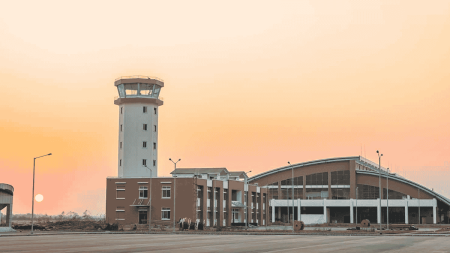
Air connectivity is more difficult. Nepal wants more international air-entry routes through Indian territory, including an approach via Mahendranagar. That matters because aircraft flying into Gautam Buddha International Airport and Pokhara International Airport face restrictions on convenient routes through Indian airspace. Better access could improve the commercial chances of both airports. The November agreement includes a promise to explore new air routes, but the visit delivered no firm breakthrough.
There is a political calculation underneath the economic opening. Shah once displayed a Greater Nepal map in his Kathmandu mayor’s office. As prime minister, he made commercial cooperation the centrepiece of his first bilateral visit to India. The two governments agreed that existing treaties, including the 1950 Treaty of Peace and Friendship, could be reviewed by mutual consent. Their joint statement also acknowledged outstanding disputes over borders and water. Those questions will keep shaping public attitudes towards India even as businesses chase closer ties.
On November 27th Nepal’s foreign ministry began coordinating with government agencies to implement the agreements. That is an early administrative step, not proof of delivery.
Nepal’s economic future will depend on how well it uses access to India’s market. The new partnership offers financing and a potentially bigger market for Nepali electricity. But a country that keeps selling mostly processed imported oil across its southern border will not close its trade deficit. The real test of Shah’s Delhi visit is whether Nepali factories emerge that can sell products India actually wants to buy. ■