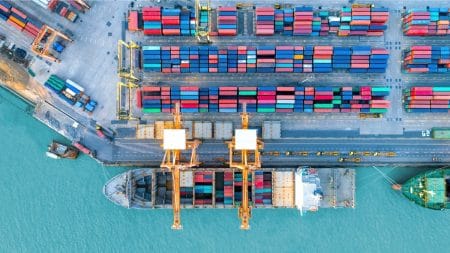
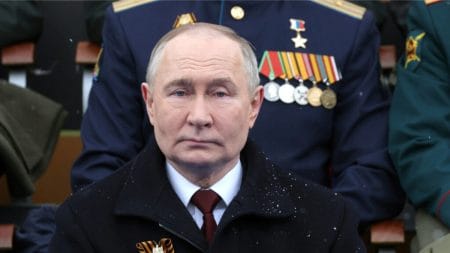
Donald Trump reignited trade hostilities by imposing sweeping new tariffs on dozens of countries, including Taiwan, India, Switzerland and Canada. The order, citing trade deficits as a national security threat, raises levies as high as 39% and formalises separate agreements with the UK, EU and Japan. Canada, which failed to secure an exemption, was hit with a 35% duty despite last-minute talks. Taiwan’s 20% rate drew criticism from President Lai, who called it temporary. Markets showed muted reaction.
Design software maker Figma surged 250% to $115.50 in its Wall Street debut, giving it a market valuation above $60bn after raising over $1.2bn in an upsized IPO. The listing, one of the strongest by a venture-backed tech firm in recent years, comes after a drought in IPO activity and was closely watched by private start-ups. Originally priced at $33 per share, the offering was heavily oversubscribed. Early investors like Index Ventures and Iconiq Capital are now sitting on stakes worth hundreds of millions. Figma, which earned $45mn in Q1 profit on $228mn in revenue, had previously walked away from a $20bn acquisition deal with Adobe due to regulatory hurdles.
Private equity investors are exiting continuation vehicles in big numbers, as weak returns, poor transparency and asset quality worries swell. Houlihan Lokey reports 85–92% of LPs declined rollovers in 2025, up from 75–80% last year. Once popular as IPOs dried up, continuation funds now face backlash after high-profile collapses, including Wheel Pros’ bankruptcy post-dividend extraction. With such deals accounting for up to 20% of exits, scrutiny is rising from pensions, endowments and regulators over incentives and governance risks embedded in these opaque extensions.
Electric vehicles made up 76% of passenger car imports in Nepal last fiscal year, propelled by low tariffs. Chinese brands, especially BYD, dominate. The country’s EV push is among the world’s fastest, but faces hurdles: policy reversals, public transport gaps and financing barriers. Still, with support from China and the Asian Development Bank, Nepal’s transport shift may become a model for developing economies leveraging clean power.
The European Central Bank warned dollar-backed stablecoins—now a $250bn asset class—could undermine monetary sovereignty. ECB adviser Jürgen Schaaf said their growing use mirrors dollarisation in fragile economies, particularly as most are backed by US Treasuries. A new US law permitting bank-issued stablecoins heightens risks of capital outflows and illicit finance. Schaaf urged faster deployment of a digital euro to preserve policy tools. The warning reflects deepening anxieties about dollar dominance in crypto and Europe’s lag in setting its own monetary digital infrastructure.
The Dubai International Financial Centre registered over 1,000 new firms in H1 2025, taking its total to 7,700. Hedge funds jumped 70% to 85, and asset managers rose to 440. Bluecrest and PIMCO were among the big names relocating. Employment rose 9% to nearly 48,000, and 1.6m sq ft of office space is under construction. Dubai’s tax-friendly, lightly regulated environment is drawing global capital, intensifying its rivalry with Abu Dhabi Global Market, which posted a 33% asset bump. The Gulf is rapidly reshaping itself as a financial power centre.
Samsung Electronics secured a $16.5bn contract to produce Tesla’s next-generation AI6 chips, to be used in self-driving systems, humanoid robots and data centres. The chips will be manufactured at Samsung’s new fab in Texas, reducing Tesla’s reliance on Nvidia and AMD. The deal, equivalent to 7.6% of Samsung’s 2024 revenue, is a win for its struggling foundry unit, which posted a $3bn loss in H1. It also cements South Korea’s role in the global AI chip supply chain at a time of growing US-China tech bifurcation.
Hong Kong’s CK Hutchison is revising its $23bn global port divestment by inviting China’s Cosco into a deal previously struck with MSC and BlackRock. Cosco will take stakes in 41 of 43 ports—excluding two in Panama—to satisfy Beijing’s regulatory approval. The exclusivity period for negotiations has expired, but CK Hutchison is extending talks to close the deal.
Anthropic is in talks to raise up to $5bn at a $170bn valuation, with Iconiq Capital likely to lead the round. The AI startup, founded by former OpenAI staff, has reached $5bn in annual recurring revenue and could hit $9bn by year-end. Amazon, GIC and Qatar’s sovereign fund are in discussions to join. CEO Dario Amodei, once hesitant, is now embracing Middle Eastern capital to fund Anthropic’s ambitions. The firm positions itself as a safety-focused rival toOpenAI and xAI, as capital requirements soar in advanced model development.
Beijing will offer families Rmb3,600 ($503) a year per child under three, covering 20 million households. The measure is China’s most direct fiscal step yet to tackle its sliding birth rate and ageing population, after earlier policy relaxations failed. Subsidies apply retroactively to children born since 2022. Officials hope the support will stimulate consumption and ease childcare burdens amid deflation and weak domestic demand. The move reflects growing anxiety over long-term labour force shrinkage and economic stagnation. ■