
IMAGE: Goran Ehren
Nepal is becoming more educated and more urban. It is also becoming less employed. Between 2000 and 2022 the share of the working-age population in employment fell by nearly half a percentage point a year. That may not seem scary, but in labour markets direction matters. Nepal began the century with one of the highest employment ratios in its income group. It now has one of the fastest-declining.
The change reflects a stalling of sectoral modernisation: the process by which workers move from low-productivity farming into higher-productivity sectors like industry and services. In much of Asia, that transition powered soaring incomes and shrinking poverty. In Nepal it has moved sluggishly. Agriculture’s share of employment has tanked at a pace similar to that of peer countries. But the sectors meant to absorb surplus labour have lagged behind. Industry and services have taken in workers at less than half the rate needed to offset the losses from agriculture. Many workers are leaving the farm but finding little formal work elsewhere.
The consequence is an employment structure that looks out of step with the country’s development level. Around 60% of workers are still in agriculture—15 percentage points higher than the average across emerging and developing economies. In Bangladesh and Cambodia those gaps have narrowed sharply. In Nepal they persist. Among comparators, only Laos has a similarly skewed pattern.
The services sector has expanded, aided by growth in tourism, digital platforms and remittance-fuelled construction. Yet employment gains have been dismal. Between 2000 and 2022 job growth in services averaged around 0.25 percentage points a year, below nearly all peers. Industry has fared no better, held back by limited demand and low investment.
Underlying the stagnation is weak productivity. In 2022 Nepal ranked lowest in overall labour productivity among its comparator group. Sector-specific figures are a little better. Agricultural productivity growth has trailed all peers. Industrial productivity has grown more slowly than in any other South Asian country apart from Bhutan. Services have performed slightly better, but not well enough to shake the employment sector.
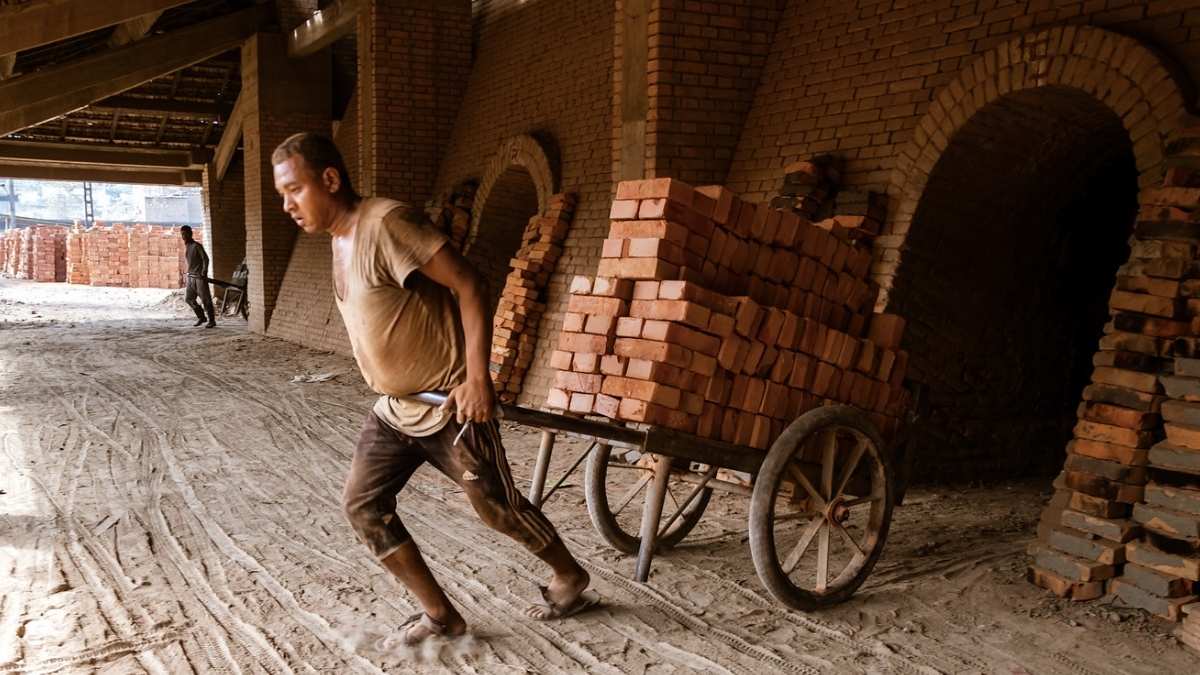
One explanation is the dominance of informal work. According to one government survey, more than 80% of workers are informally employed. In agriculture informal work is nearly universal. In industry it accounts for three-quarters of all jobs. Even in services (where some progress has occurred) around 40% of workers are outside formal arrangements.
Informality suppresses wages and limits access to finance. It reduces incentives for firms to expand, too. Informal businesses tend to stay small and unproductive. Informal workers, especially women, have fewer opportunities to move up the skills ladder. The female labour force participation is relatively high: around 70%, outpacing most of South Asia. But the majority work informally, mainly in subsistence farming. Their participation in non-agricultural sectors is unusually low.
The country’s weak record on formal job creation shows serious constraints. Trade openness is limited. The World Bank ranks Nepal in the bottom quartile of emerging and developing economies on this measure. Export-to-GDP ratios are among the lowest in Asia. Businesses report persistent obstacles in customs processing as well as access to finance and regulatory transparency. Where Bangladesh expanded garment exports and Cambodia liberalised manufacturing, Nepal’s industrial base has stayed narrow and stagnant.
Policy remedies are not in short supply. Evidence from elsewhere suggests, among others, trade reform, financial deepening and investment in education all support labour reallocation. According to World Bank estimates, had Nepal reached the average levels of trade openness, financial access and education found among its peers, its share of non-agricultural employment could have been up to 13.5 percentage points higher. Its overall employment ratio might have risen by as much as three points.
Such estimates are hypothetical. In reality structural change requires political stability and sustained public investment: areas where Nepal has faltered. Government turnover is frequent. Bureaucratic incentives are extractive. Policies are announced, then ignored. In the meantime, growth has tilted toward sectors with limited employment absorption. Urban economies are dominated by retail and construction. Capital investment is low. Migration continues to serve as a pressure valve.
This reliance on external income has its limits. Remittances support consumption but do little to build productive capacity. Education and vocational training programmes are fragmented and underfunded. Large-scale investment in technology or export-oriented manufacturing is conspicuously absent. The economy grows but in ways that sidestep labour.
Nepal’s experience is not unusual. But it is troublingly persistent. In many developing countries, falling agricultural employment coincides with formal sector expansion. In Nepal it has coincided with economic drift. That divergence is not inevitable. The country has favourable demographics and a strategically useful location between two big markets. It also has an engaged diaspora. These advantages remain latent.
Until the economy generates demand for formal, higher-productivity work, labour will stay trapped in informal activity or kicked abroad. The issue is not unemployment but underutilisation. If policy continues to substitute migration for transformation, Nepal will keep producing workers who serve other economies better than their own—while its government drafts five-year plans nobody reads and enforces labour laws nobody follows. ■





