Here comes the sun
THE STREETS of Kathmandu last September became a brutal display of a generation running out of patience. Since the 240-year-old Shah monarchy was dumped in 2008, Nepal’s young have watched their prospects traded away in the back rooms of ministerial bungalows by the same small circle of ageing men. The proximate spark was a clumsy ban on social-media platforms. The deeper cause was a long-simmering anger at bhagbanda: the habit of carving up the state as though it were a family estate. As government buildings burned and student protesters hoisted anime flags, the old political class was being told its time was up.
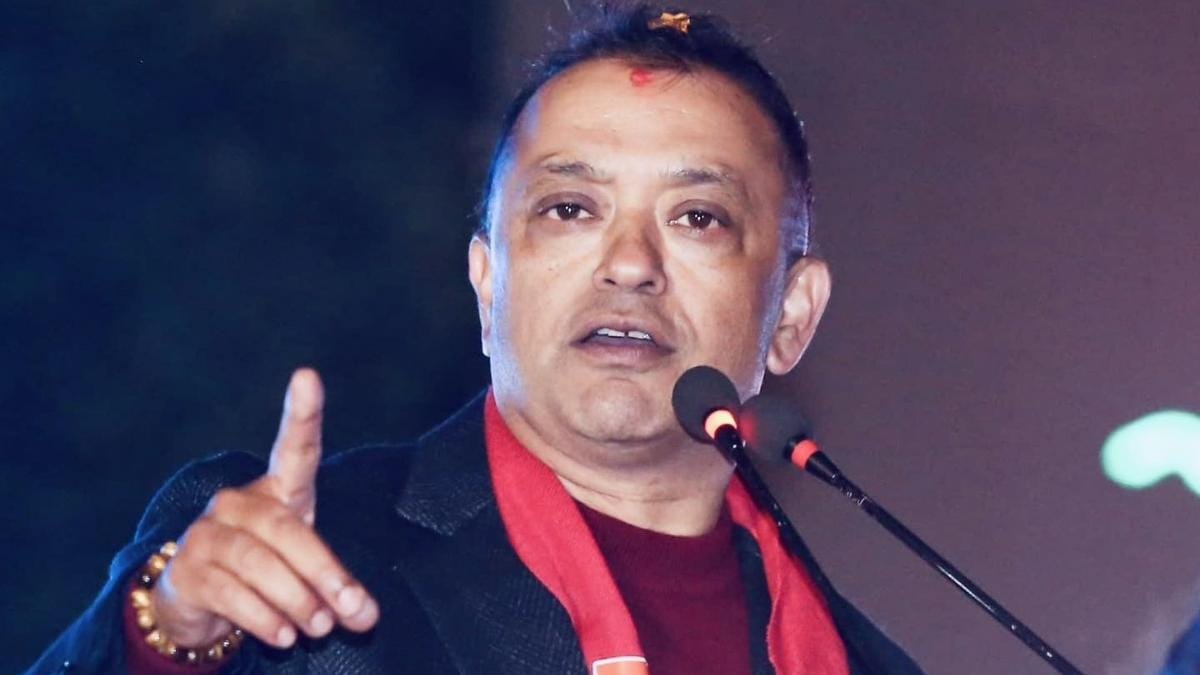
Four months later, the smoke has cleared to pave the way for a political atmosphere that is fundamentally altered. On January 14th the Nepali Congress, the country’s venerable “grand old party”, staged its own kind of palace coup—executed with the care of a probate lawyer. At a special general convention in Kathmandu, Gagan Thapa was elected party president without opposition. At 49, he is young by the standards of a political class that treats 80 as the peak of usefulness. His mission is audacious: to rewrite the DNA of a party that has thrived on handouts and backroom deals.
To grasp the scale of Mr Thapa’s task, consider the man he replaced. Sher Bahadur Deuba has served as prime minister five times. He has outlasted royal coups, a Maoist insurgency and enough internal rebellions to exhaust a historian. His method was to keep the party’s “tree”—its election symbol—close to power by whatever alliances were required, including with communist rivals.
But the “tree” had become sickly. In the eyes of the Gen Z protesters who paralysed the capital last autumn, the Nepali Congress had lost its soul. By entering into pre-poll alliances with the CPN-UML and the Maoists, the party had essentially told its voters that their choice did not matter. A vote for the “tree” might end up supporting a hammer-and-sickle candidate in the next valley. Mr Thapa’s first, and most consequential, move as party president is to end that ambiguity. The Nepali Congress will contest all 165 directly elected seats in March on its own, promising neither alliances nor compromises.
That decision to go it alone, however, is a big gamble. It concedes that the party would rather lose on its own terms than survive as a minor partner in a cynical coalition. Mr Thapa and his ally, Bishwa Prakash Sharma, the newly elected vice-president, are wagering that voters want clarity more than convenience. By restoring the party’s independent identity, they hope to draw back younger voters who had begun to drift towards newer, populist groups such as the Rastriya Swatantra Party headed by Rabi Lamichhane, a former television host who was recently released on bail following a cooperative fraud investigation. It is an attempt to secure a clean mandate, unburdened by the compromises of the past decade.
The transition has not been smooth. It has played out through the sort of legal and procedural skirmishing that passes for drama in Nepali democracy. When the reformist faction demanded a special convention late last year, the party establishment pushed back. Mr Thapa and Mr Sharma went ahead regardless and were briefly suspended by Mr Deuba’s faction last week—a short-lived internal exile that settled nothing. The dispute ended up before the Election Commission, which was forced to decide which version of the Nepali Congress was, in legal terms, the real one.
The commission’s ruling on January 16th was a watershed. By recognising the committee elected at the special convention, the state effectively endorsed a generational takeover. It was a victory for party rules over personal authority. Mr Thapa has been careful to present this as evolution rather than rupture. He speaks of Mr Deuba with the deference expected in Nepali politics. His actions, however, suggest a leader clearing out the past.
The most contentious reform, Mr Thapa proposes, is the introduction of a “cooling-off” period for senior leaders. In most democracies, a leader who had lost the confidence of younger voters or failed to secure broad support from his own party might retire. In Nepal they tend to just wait for the next rotation. Mr Thapa’s plan encourages senior figures, including Mr Deuba, to step aside from elections to make space for new talent. It is a tactful way of telling the octogenarians to spend more time on memoirs and less on ministerial portfolios.
Critics, of course, find the comparison to Tony Blair’s “New Labour” unavoidable. Like Mr Blair in 1994, Mr Thapa is trying to modernise a party steeped in tradition and past struggles. The Nepali Congress led the 1950 revolution against the Rana autocracy and the pro-democracy movements of 1990 and 2006. Its history is its greatest asset as well as its heaviest burden. Mr Thapa’s trouble is to keep the party’s roots firmly in these democratic values while pruning the branches that have grown brittle and unproductive.
The party’s internal renewal also reaches its proportional representation (PR) lists. In past elections these tended to be packed with the wives, siblings and business associates of party insiders—a practice that inspired the #NepoBaby hashtag during the September’s protests. Mr Thapa has pledged a list that reflects a meritocratic Nepal: professionals, young leaders, grassroots activists and so on. If he delivers he will have dismantled a key channel of patronage that has kept the old guard in power for so long.
Yet the “New Congress” faces a daunting electoral map. The general election on March 5th will test whether a centrist, reformist message can gain traction, given that the country has grown ever more polarised and economically fragile. The CPN-UML, led by the seasoned K.P. Sharma Oli, remains a formidable rival with a disciplined grassroots network. Mr Oli, who was ousted as prime minister by the same uprising that elevated Mr Thapa, is campaigning on stability and nationalism. He is certain to cast the “New Congress” as an untested experiment in uncertainty.
Also read: Why Jhapa-5 is likely to end miserably for Balen Shah
Furthermore, the split within the Congress—Mr Deuba’s faction has vowed to challenge the Election Commission’s ruling in the supreme court—piles further complexity. His supporters retain big influence in several districts. If they choose to sit out or undermine the campaign, Mr Thapa’s solo bid could collapse in defeat. Unity is the currency of the moment. Mr Thapa has made visible efforts to include dissenting voices in his new central committee, but in the heat of an election, old grudges are never far below the surface.
There is also the risk of a second-order effect. By rejecting pre-election alliances, the Nepali Congress could inadvertently benefit its rivals. Under Nepal’s first-past-the-post system, a divided democratic or reformist vote tends to hand victory to the communists. Mr Thapa is betting that his party is strong enough to withstand that risk. He counts on the psychological appeal of the “rukh” to draw voters weary of the ideological contortions required to back an alliance.
Yet he recognises that post-election coalitions will be unavoidable in a hung parliament. That allows the party to campaign on its own agenda while remaining a credible partner in forming a government afterwards. It is a return to parliamentary norms after years of what many described as the “cartelisation” of Nepali politics.
At the centre of this whirlwind is Mr Thapa himself, a figure who divides opinion. To supporters, he is the only leader capable of rescuing the party from irrelevance. To critics, he is a media-savvy opportunist, riding the wave of youthful anger. His seat in Kathmandu-4 is secure, but a national campaign is a different headache. He will have to show he can speak to the concerns of a Terai farmer as convincingly as to a graduate in Lalitpur.
The stakes could hardly be higher. If Mr Thapa succeeds in making the Nepali Congress the largest party this March, he will offer a model for how traditional South Asian parties can survive the wrath of Gen Z. He will have shown that internal reform is possible—if one is willing to risk a clean break. If he fails, the party risks following the path of other regional “grand old” parties, shrinking into a historical relic, remembered only by those who lived through the struggles of the last century.
As the election machines start to hum, nerves are tense at the Nepali Congress headquarters in Sanepa. The old Koirala portraits still stare down from the walls, reminders of a dynastic past that once defined the party. But the conversations in the hallways are now about digital strategy, transparency and candidate selection, however divided the party may be. The “tree” is being replanted in stormier soil, and whether it takes root or snaps under the glare of public scrutiny could well define Nepal this year.
The octogenarians of the old guard, meanwhile, might want to start scouting comfortable armchairs. The coming months will move fast, and the tempo of the “New Congress” is not built for those who still prefer the slow waltz of the past. ■