Image: Haiyun Jiang/The New York Times
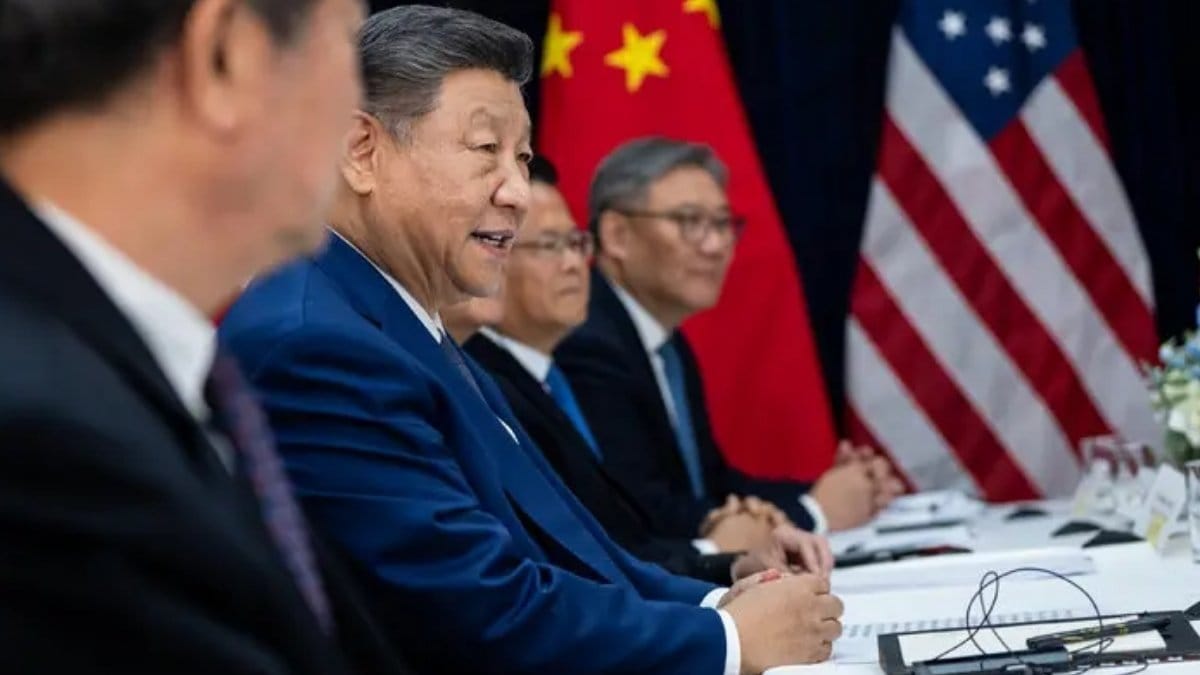
When Xi Jinping emerged from his meeting with Donald Trump in Busan, he looked like a man who had just proved a point. The Chinese leader had spent months signalling that his country could withstand economic coercion and strike back where it hurt. This week he did both.
China agreed to resume purchases of American soybeans and suspend new export limits on rare earths—the obscure but indispensable minerals used in everything from electric motors to missiles. In return, Washington halved tariffs on a wide range of Chinese imports, lifted port fees on Chinese ships and delayed export controls that would have barred Chinese firms from accessing advanced American technology. It was, on paper, a ceasefire. In truth it looked more like a Chinese victory.
Read more: Donald Trump and Xi Jinping agree to a trade truce
Mr Xi’s leverage came from two commodities. China buys roughly two-thirds of America’s soybean exports, a crop that anchors farm incomes across the Midwest. Cutting off that market had hit Mr Trump’s political base hard. At the same time, China refines around 90% of the world’s rare earths—elements vital for modern industry but mined and processed in few places. A threat to curtail their export jolted Washington into compromise. Beijing did not need to follow through; the warning sufficed.
The trade war that began in Mr Trump’s first term has ceased to be about trade alone. Tariffs and sanctions have morphed into tools of strategic pressure, used to slow technological advances and test national resolve. America’s export bans on semiconductors and chipmaking equipment aimed to choke China’s ambitions in artificial intelligence and defence. China’s countermeasures—against critical minerals and foreign firms—were designed to demonstrate that economic interdependence cuts both ways.
The Busan accord suggests that Beijing believes it has proved its point. For all of Washington’s talk of “de-risking,” China remains too central to global supply chains to be isolated. American companies still rely on Chinese inputs, while Mr Trump’s electoral calculus still depends on Chinese demand. That, in turn, allows Mr Xi to pose as a statesman offering calm after years of confrontation—without conceding anything fundamental.
For Mr Trump, the deal offered the optics of success. He returned home claiming victory for American farmers and vowing closer co-operation with China on fentanyl trafficking, which has claimed many American lives. For Mr Xi, it offered something subtler but more durable: a demonstration that America’s coercive power can be blunted through patient endurance and selective retaliation.
The irony is that both leaders got what they needed politically, while the underlying rifts remain unresolved. America’s tariffs still cover nearly half of Chinese imports. Export controls on high-end chips remain intact. China’s state subsidies, which lie at the heart of Western complaints, were untouched. Yet for now, both sides seem content to call a pause in a conflict that neither can afford to escalate.
Diplomatic tempers have cooled before, only to flare again. The last truce, struck earlier this year, was nearly derailed by fresh American sanctions and a Chinese ban on key minerals. The latest accord is no more secure. A single perceived slight—a new technology blacklist or a naval skirmish near Taiwan—could undo it overnight.
Still, the balance of perception matters. China’s negotiators have shown that their country can match America blow for blow, and perhaps, at times, make it blink first. For a leadership that prizes the projection of strength, that lesson may be satisfaction enough. ■